
Best Citrus Trees for Your Home Garden in Perth

Perth is one of the easier Australian cities for growing citrus, but it is not a set-and-forget climate. Long dry summers, sandy soils, hot easterlies and mild wet winters all shape how well a tree grows, fruits and survives its first few years.
The good news is simple: choose the right variety, plant it in the right spot, and keep water and feeding consistent. Do that, and a backyard citrus tree can reward you with lemons for cooking, limes for drinks, mandarins for lunchboxes, and oranges that taste far better than anything that has sat in cold storage.

Perth’s climate suits citrus when the site is right
Citrus originally comes from warm regions, so Perth’s Mediterranean climate is a strong match. The city has plenty of sun, mild winters and a long growing season. That gives citrus enough warmth to flower, set fruit and ripen well.
The challenge is summer stress. Perth summers are dry, and a week of hot weather can hit young trees hard, especially in exposed inland suburbs. Coastal gardens may also deal with salty winds, while many suburbs sit on light sandy soil that dries out quickly and holds very little nutrition.
A good citrus spot in Perth has:
Full sun
Aim for at least 6 hours of direct sun each day. More sun usually means better flowering and sweeter fruit.
Free-draining soil
Citrus hates wet feet. Drainage matters more than richness at planting time.
Shelter from harsh wind
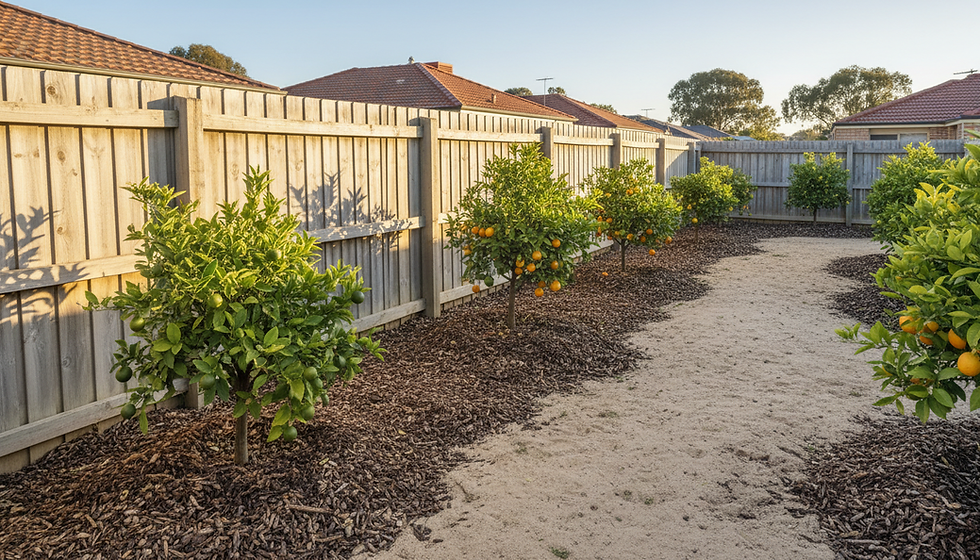
Hot easterlies can burn leaves and dry flowers. A fence, hedge or nearby structure can help without blocking sun.
Room for airflow
Citrus likes protection, but cramped corners invite pests and fungal problems.
If the soil is pale, sandy and water-repellent, improve it before planting. Compost, aged manure and a quality soil wetter can help water move into the root zone. In heavier soils around the hills, raise the planting area slightly so winter rain does not pool around the roots.
For pots, choose dwarf citrus and use a premium potting mix made for fruiting plants. A pot on paving will heat up in summer, so larger containers are safer than small decorative pots. As a guide, start with a pot at least 50 cm wide for a young dwarf tree, then move up as it grows.
The best citrus varieties for Perth gardens
The best choice depends on how much space you have, what you cook with, and whether you want fruit across the year or one big seasonal crop. For most home gardens, lemons, limes, mandarins and oranges are the main winners.
Here are reliable options to consider when choosing a citrus tree for Perth conditions.
Citrus type | Good varieties for Perth | Why it works well | Best for |
Lemon | Meyer, Eureka, Lisbon | Productive, useful and generally hardy | Cooking, drinks, everyday use |
Lime | Tahitian lime, West Indian lime | Likes warmth and suits small spaces | Drinks, seafood, Asian-style dishes |
Orange | Washington navel, Valencia | Sweet fruit with good sun and steady water | Fresh eating and juicing |
Mandarin | Imperial, Emperor, Hickson | Easy to peel and popular with children | Lunchboxes and fresh snacks |
Grapefruit | Ruby, Marsh | Suits warm gardens with enough space | Breakfast fruit and juice |
Cumquat | Nagami, calamondin | Compact, ornamental and pot-friendly | Small gardens and preserving |
Blood orange | Arnold, other blood orange types | Can grow well, but colour varies with cool nights | Fresh eating and desserts |
Lemons give the best return for most homes
If there is room for only one tree, plant a lemon. Lemons suit Perth well, and they are useful almost every week of the year.
Meyer lemon is a favourite for smaller gardens. It is naturally compact, less thorny than some types, and produces smooth, mild fruit with a hint of sweetness. It also works well in a large pot.
Eureka lemon is a strong choice for households that use lots of lemons. It can crop over a long period and has the classic sharp lemon flavour. Give it space, sun and regular feeding.
Lisbon lemon is hardy and productive, often more tolerant of exposed sites, but it can be thornier and more vigorous. It suits larger gardens better than courtyard spaces.
Limes love Perth warmth but need frost protection
Tahitian lime is the easiest lime for many Perth gardens. It is mostly seedless, productive and less fussy than smaller true limes. The fruit is picked green, before it turns yellow.
West Indian lime has a stronger lime flavour and smaller fruit, but it is more cold-sensitive. In cooler pockets, young trees may need protection through winter.
Limes can stay compact with light pruning, so they suit courtyards and large pots. They need steady watering through summer, especially while fruit is swelling.
Oranges need sun and patience
Oranges grow well in Perth when they get enough sun and summer water. They are slower to reward than lemons, but a healthy orange tree is a long-term asset.
Washington navel is the classic eating orange. It is sweet, seedless and easy to peel. It usually ripens in the cooler months.
Valencia is better for juicing and holds well on the tree. It ripens later than navel oranges, which can help spread the harvest season.
Oranges are not ideal for tiny spaces unless you choose a dwarf tree. They need a healthy canopy to produce good fruit, and cramped trees often struggle.
Mandarins are ideal for families and smaller gardens
Mandarins are one of the most rewarding choices for Perth home gardens. They are easy to eat, often sweet, and many varieties stay smaller than oranges.
Imperial mandarin is an early favourite. It has good flavour and peels easily, although it can have seeds depending on pollination.
Emperor mandarin is an older style with rich flavour and loose skin. It suits fresh eating and usually performs well in warm conditions.
Mandarins can be a little prone to biennial bearing, where a heavy crop one year leads to a lighter crop the next. Thin very heavy crops when the fruit is small if the branches are overloaded.
Cumquats and calamondins are great for pots
Cumquats are often overlooked, but they are excellent for small Perth gardens. They tolerate pots, look attractive, and produce masses of small fruit. Nagami cumquat has oval fruit with a sweet skin and tart flesh.
Calamondin is another compact citrus relative. It is highly ornamental and produces small acidic fruit that works well in marmalades, marinades and drinks.
These are good choices near patios, provided the pot is large and the tree does not dry out.
Planting citrus well makes the first summer easier
Planting time matters. In Perth, autumn and early spring are usually the best windows. Autumn planting gives the roots time to settle before the next summer. Spring planting can also work, but you will need to watch watering once hot weather arrives.
Avoid planting during peak summer unless you can shade and water the tree carefully. Young citrus can lose leaves fast during heat stress.
Prepare the soil before planting
Start with a wide planting area rather than a narrow hole. Citrus roots spread sideways near the surface, so the surrounding soil matters.
Mix compost through the broader area, not just the planting hole. If the soil is extremely sandy, add a small amount of clay-based soil improver or mature compost to help hold moisture. Avoid burying the trunk or creating a deep bowl that stays wet in winter.
When planting:
Water the tree well in its pot before removing it.
Dig a hole about the same depth as the root ball and wider than the pot.
Set the tree so the top of the root ball sits level with the surrounding soil.
Keep the graft union above the soil line.
Backfill gently and water deeply.
Mulch around the tree, keeping mulch away from the trunk.
The graft union is the slightly swollen join near the base of many citrus trees. If it gets buried, the tree can become weak or send up unwanted growth from the rootstock.
Give pots a serious setup
A citrus tree for your home garden can grow happily in a pot, but the pot must be large enough to buffer heat and dry weather. Small pots look neat at first, then become constant work in January.
Choose:
A dwarf variety
A wide, stable pot with drainage holes
Premium potting mix, not garden soil
Pot feet if the container sits on paving
A saucer only if it does not leave the roots sitting in water
Potted citrus needs more feeding than in-ground citrus because nutrients wash out faster. It also needs more regular watering in hot weather.
Caring for citrus through Perth’s seasons
Citrus care is seasonal. The tree needs support when it is flowering, setting fruit and pushing new growth. It also needs protection during the toughest summer weather.
Water deeply and consistently
In-ground citrus prefers deep, less frequent watering once established. Young trees need closer attention because their roots are still shallow.
During the first summer, check the soil under the mulch often. If the top few centimetres are dry and the tree looks dull or curled, water deeply. A quick sprinkle is not enough. Water needs to reach the root zone.
Signs of water stress include:
Leaves curling inward
Young fruit dropping
Dry, crisp leaf edges
Dull or grey-green foliage
Flowers falling before fruit sets
Overwatering can also cause problems, especially in poorly drained spots. Yellowing leaves, sour-smelling soil and constant wetness around the roots are warning signs.
Feed at the right times
Citrus is hungry. In Perth’s sandy soils, regular feeding makes a clear difference.
Use a complete citrus fertiliser and follow the label for the tree’s age and size. Many gardeners feed in late winter or early spring as growth begins, then again in late summer or early autumn to support the next flush.
Citrus also needs trace elements. Yellow leaves with green veins can point to iron or magnesium issues, especially in alkaline soils. A citrus-specific feed often includes these, but persistent yellowing may need a trace element mix.
Do not overfeed a stressed, dry tree. Water first, let it recover, then feed.
Mulch well but keep the trunk clear
Mulch is one of the simplest ways to help citrus in Perth. It cools the root zone, slows evaporation and improves sandy soil as it breaks down.
Use coarse organic mulch such as wood chips, lupin mulch, straw or composted tree prunings. Keep it a handspan away from the trunk to reduce the risk of collar rot.
Refresh mulch before summer. A bare circle of hot sand around a citrus tree is hard on roots and wastes water.
Prune lightly and with purpose
Citrus does not need heavy pruning. In fact, hard pruning can remove fruiting wood and expose branches to sunburn.
Prune to:
Remove dead or crossing branches
Lift low branches slightly for airflow
Cut out rootstock suckers below the graft
Reduce height if the tree is becoming hard to manage
Remove branches damaged by wind or pests
For most home trees, light pruning after harvest is enough. Avoid stripping the centre open in Perth’s hot sun, as exposed limbs can burn.
Common citrus problems in Perth gardens
Healthy trees handle pests better, but citrus often attracts unwanted visitors. The goal is regular checking, not panic spraying.
Citrus leafminer marks new growth
Citrus leafminer leaves pale, winding trails through young leaves. It mostly attacks soft new flushes. Mature leaves are less attractive.
Young trees can suffer if repeated flushes are damaged. Remove badly affected leaves if damage is light, and avoid pushing too much soft growth with excess nitrogen in warm months.
Gall wasp can weaken branches
Citrus gall wasp causes swollen lumps on stems. Left alone, heavy infestations can reduce vigour. Prune out galls before wasps emerge, where practical, and dispose of the prunings carefully. Do not leave them under the tree.
Scale, aphids and ants often appear together
Scale insects and aphids feed on sap and produce sticky honeydew. Ants often farm them, so controlling ants can help reduce repeat problems.
Check the undersides of leaves, stems and soft shoots. Horticultural oils can help with scale when used according to the label and only in suitable weather. Avoid spraying oils during heat.
Fruit fly needs attention
Mediterranean fruit fly is a known issue in Western Australia and can damage soft fruits, including some citrus. Good garden hygiene helps. Pick ripe fruit, collect fallen fruit, and avoid leaving spoiled produce on the ground.

How to choose the right citrus for your space
The best tree is the one that matches the garden, not just the fruit bowl.
For a small courtyard, choose Meyer lemon, Tahitian lime, cumquat or calamondin on dwarf rootstock. These stay manageable and suit pots.
For a family backyard, plant one lemon and one mandarin. That combination gives everyday kitchen value and easy fresh fruit.
For a larger block, add an orange, grapefruit or Valencia for juicing. These need more space but can produce heavily once mature.
For a rental or a paved area, use large pots and dwarf trees. Choose citrus that earns its keep, such as lemon, lime or cumquat.
If planting more than one tree, think about harvest timing. A lemon plus a mandarin gives variety. A navel orange plus a Valencia spreads the orange season. A lime adds summer use when drinks, salads and seafood are on the menu.
The real key is not chasing the rarest cultivar. It is choosing a healthy grafted tree, planting it well and keeping it watered through its early summers.

A good citrus tree pays you back for years
Perth gives citrus plenty of what it likes: sun, warmth and mild winters. The main job is helping the tree through dry summers and poor sandy soil.
Start with a variety that suits the space. Plant it where it gets sun and drainage. Water deeply, feed regularly, mulch well and check for pests before they become a major problem.
For most homes, a Meyer lemon or Eureka lemon is the safest first pick. Add a Tahitian lime for summer flavour, a mandarin for easy fresh fruit, or a dwarf cumquat if space is tight. With a little steady care, citrus can become one of the most productive and satisfying parts of a Perth garden.


Comments