
Buying Orange Trees Online in Perth A Beginners Guide to Healthy Citrus and Easy Care

A healthy orange tree can turn a sunny Perth backyard, courtyard, or balcony into a small citrus grove. The appeal is simple: glossy green leaves, fragrant spring blossom, shade in summer, and fruit you can pick straight from the tree.
Buying an orange tree online also makes the process easier than it used to be. Instead of driving between garden centres hoping to find the right variety, you can compare options, read plant descriptions, check pot sizes, and arrange delivery to your door.
The key is knowing what to look for before you order. A good online nursery will help you choose a strong tree suited to Perth’s warm, dry summers and mild winters. A little planning at the start gives your orange tree the best chance to settle in, grow well, and reward you with fruit for years.

Why an orange tree is a smart choice for Perth gardens
Orange trees suit many Perth homes because they love sunshine and can cope well with warm conditions once established. They are productive, attractive, and useful in both large and small spaces.
For many gardeners, the biggest benefit is the fruit. Fresh oranges taste better when they are picked at the right time, not stored or transported for long periods. Having your own tree also means you can harvest only what you need, leaving the rest on the tree until ready.
Orange trees offer more than fruit. They bring structure to the garden, with evergreen leaves that look good through the year. In spring, citrus blossom adds a clean, sweet scent that makes even a small courtyard feel more alive. Birds and beneficial insects may also visit the flowers and surrounding garden.
For beginners, an orange tree is a rewarding first fruit tree because:
It is easy to understand what the plant needs Sun, drainage, water, food, and protection from stress
It grows well in many garden styles In-ground beds, large pots, courtyards, and espaliered forms can all work
It gives clear signs when something is wrong Yellow leaves, curled leaves, dry soil, or pest marks are usually easy to spot
It can become part of everyday cooking Juice, zest, salads, marinades, cakes, preserves, and lunchbox fruit all come from one tree
Orange trees also make sense for households that want to grow more at home without taking on a complicated orchard. One well-chosen tree can provide plenty of value, especially when it is planted in the right spot and cared for consistently.
If you are buying citrus trees for the first time, orange trees are a practical place to start. They are familiar, useful, and forgiving when their basic needs are met.
How to choose the right orange tree online
Online shopping gives you access to more varieties, but it also means you need to read descriptions carefully. Photos can help, yet the details matter more.
Start with the type of orange. Some varieties are better for eating fresh, while others are ideal for juicing. Navel oranges are popular because they are sweet, seedless or low in seed, and easy to peel. Valencia oranges are often grown for juice and usually hold well on the tree. Blood oranges have rich colour and a more complex flavour, though their colour can vary with conditions.
Think about when you want fruit. Different oranges ripen at different times. If you already have other citrus, such as mandarins or lemons, choosing an orange with a different harvest window can spread fruit through the year.
Also check the tree size. Not every orange tree suits every space.
Garden situation | What to look for |
Small courtyard or balcony | A dwarf orange tree in a large pot |
Family backyard | A standard grafted tree with room to grow |
Narrow garden bed | A compact or espalier-suitable form |
Rental property | A potted dwarf tree that can move with you |
A dwarf orange tree is often the easiest choice for beginners with limited space. It can fruit well in a large pot if it gets enough sun, water, and nutrients. Standard trees need more room, but they can become productive garden features when planted in open ground.
Check for signs of a healthy plant
A reputable online nursery should give enough information to help you understand what you are ordering. You may not be able to inspect the exact tree in person, but you can still look for signs of quality in the listing.
A healthy orange tree should have:
Glossy green leaves, not widespread yellowing or browning
A strong central stem or balanced branching
No visible pest damage in photos
A clear graft union above the soil line
A pot size that suits the tree’s age
A variety name, not just a vague label such as “orange tree”
The graft union is the slightly swollen area near the base where the fruiting variety joins the rootstock. Most citrus trees are grafted because this improves consistency, strength, and performance. The graft should sit above soil level when planted. If it is buried, the tree may struggle or send up unwanted rootstock shoots.
Read the variety notes before you buy
Good listings often mention fruit season, flavour, expected height, pot suitability, and sun requirements. Look for this information before adding the tree to your cart.
Be cautious with listings that rely only on attractive fruit photos. A tree covered in oranges may look tempting, but the nursery should also explain practical details, such as whether it is dwarf or standard, grafted or seed grown, and suited to containers.

How to find a reputable online nursery
When buying citrus trees online in Perth, choose nurseries that are clear about plant quality, delivery areas, and aftercare. The best sellers make it easy to understand what will arrive and how to care for it.
A strong online nursery will usually provide:
Clear plant descriptions Variety, size, pot diameter, dwarf or standard form, and fruiting season
Realistic images Photos that show the plant type, not only perfect fruit close-ups
Delivery information Coverage areas, timing, handling methods, and any limits for larger pots
Plant health practices Notes about pest checks, nursery hygiene, or quarantine rules where relevant
Helpful support Care guides, planting advice, or a way to ask questions before ordering
In Australia, plant movement rules can affect what nurseries can send between states. Perth buyers should check that the nursery can deliver legally and safely to Western Australia. Many local or WA-based nurseries will make this clear. If ordering from outside WA, read the shipping terms carefully before placing an order.
Reviews can be useful, but read them with common sense. Look for comments about plant condition on arrival, packaging quality, helpful communication, and whether the variety matched the listing. One poor review does not always tell the whole story, but repeated complaints about damaged plants or unclear service are a warning.
Questions to ask before ordering
If the listing does not answer your questions, contact the nursery. A good seller should be able to explain their plants in plain language.
Useful questions include:
Is the tree grafted?
Is it a dwarf or standard orange tree?
What size pot is it currently growing in?
Is it suitable for Perth conditions?
Can it be grown in a large pot?
How is it packed for delivery?
What happens if it arrives damaged?
These questions are especially helpful for beginners. They also reveal how much the nursery understands its stock. Clear answers build confidence.
Delivery options and what to do when your tree arrives
Delivery is one of the biggest advantages of buying online, especially if you do not have a vehicle suited to carrying a potted tree. Orange trees can be awkward to transport, and a well-packed delivery can prevent broken branches, spilled potting mix, and heat stress.
Delivery options may include local courier, nursery van delivery, postal services for smaller plants, or click and collect. Larger trees may need special handling. Some nurseries deliver only on certain days, while others hold orders during extreme heat to protect the plant.
That matters in Perth. Summer heat can stress a young citrus tree quickly, especially if it sits in a van, depot, or exposed doorway for too long. If possible, choose a delivery day when someone can bring the tree into a sheltered spot soon after arrival.
When your orange tree arrives, unpack it gently and inspect it right away.
Check for:
Broken branches
Severe wilting
Soil that is bone dry or waterlogged
Pest signs under leaves
Damage around the graft union
A label that matches the variety ordered
Minor leaf drop or a few damaged leaves can happen during transport. That does not always mean the tree is unhealthy. Give it shade, water if needed, and a day or two to recover before planting. If the damage looks serious, take clear photos and contact the nursery promptly.
Do not rush to fertilise on the day it arrives. The tree has just been moved and may be stressed. Water it well if the mix feels dry, keep it protected from harsh afternoon sun for a short settling period, then plant or pot it once it looks stable.

Caring for orange trees in Perth’s climate
Perth’s climate gives orange trees plenty of sun, which they need for strong growth and sweet fruit. The main challenges are dry summers, sandy soils, hot winds, and occasional winter cold in some suburbs.
Choose the sunniest practical position. Orange trees need at least six hours of direct sun each day, and more is better. Morning sun with some protection from harsh late afternoon heat can work well for young trees, especially in exposed areas.
Good drainage is essential. Citrus dislike sitting in soggy soil. Many Perth gardens have sandy soil, which drains quickly but may not hold enough water or nutrients. Improve the planting area with compost and quality organic matter, but avoid making a tiny rich pocket in poor surrounding soil. Blend improvements through a wider area so roots can spread.
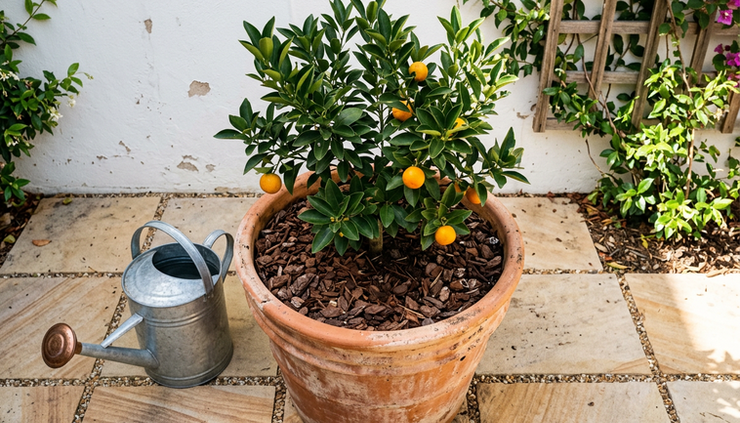
For pots, use a premium potting mix made for fruit trees or citrus. A large pot gives roots room and helps stop the tree drying out too fast. Make sure the pot has generous drainage holes.
Water regularly while the tree settles
A new orange tree needs consistent watering while it establishes. In warm weather, check soil moisture often. The top few centimetres can dry quickly, but the root zone may still hold moisture, so use your finger or a moisture meter before watering again.
For in-ground trees, deep watering is better than frequent light sprinkling. It encourages roots to grow down. For potted trees, water until it runs from the drainage holes, then let the mix begin to dry before watering again.
During Perth summers, young trees may need extra attention through heatwaves. Mulch helps keep the root zone cool, but keep mulch away from the trunk to prevent rot.
A simple mulch ring can make a big difference. Use coarse mulch, spread it wide, and leave a clear gap around the stem.
Feed citrus during the growing season
Orange trees are hungry plants. They need regular feeding to grow leaves, flowers, and fruit. Use a citrus fertiliser and follow the packet directions. More is not better. Too much fertiliser can burn roots, especially in pots or dry soil.
Water before and after feeding if the soil is dry. This helps protect the roots and move nutrients into the soil.
Yellow leaves can mean several things, including low nitrogen, iron deficiency, poor drainage, cold soil, or watering stress. Do not assume every yellow leaf needs fertiliser. Look at the whole plant and its growing conditions.
Protect young trees from stress
Young orange trees benefit from a little care while they build strength.
Watch for:
Hot winds that dry leaves
Sunburn on exposed stems
Scale, aphids, and leaf miner
Competition from lawn or weeds
Rootstock shoots below the graft
Remove rootstock shoots as soon as you see them. These shoots grow from below the graft and can take energy from the fruiting variety.
Citrus leaf miner often affects soft new growth. It leaves silvery trails in leaves. Light damage is common and not usually a disaster, but repeated heavy damage can slow young trees. Good plant health, balanced feeding, and removal of badly affected soft growth can help reduce problems.
Pruning should be light. Remove dead, damaged, or crossing branches. Avoid heavy pruning on a young tree unless you need to shape it. The leaves are the tree’s food-making system, so keeping a healthy canopy matters.
Beginner mistakes to avoid
Most orange tree problems start with placement, watering, or expectations. Avoiding a few common mistakes will make the experience much smoother.
Do not plant too deep. The top of the potting mix should sit level with the surrounding soil. The graft union must stay above soil level.
Do not place the tree in shade and expect sweet fruit. Citrus need sun. A shaded orange tree may survive, but it will usually crop poorly.
Do not use garden soil in pots. It can compact, drain badly, and restrict roots. Use a quality potting mix designed for containers.
Do not let a young potted tree dry out completely. Pots heat up and lose moisture quickly in Perth summers.
Do not keep heavy fruit on a very young tree. If a small tree sets lots of fruit early, thinning some fruit can help it put energy into roots and branches.
The goal in the first year is not a huge harvest. The goal is a strong, settled tree. Fruit will come more reliably when the tree has a healthy root system and a balanced canopy.
The joy of growing oranges at home
There is something deeply satisfying about picking fruit from your own tree. An orange tree changes with the seasons in a way that keeps you connected to the garden. New growth appears, blossom opens, small green fruit forms, and slowly the crop colours up.
For beginners, that process builds confidence. You learn how your soil behaves, how often your garden dries out, and how plants respond to care. Each small success makes the next plant less intimidating.
Homegrown oranges also encourage simple habits. A quick morning check becomes part of the routine. Is the mulch still in place? Are the leaves upright? Does the pot need water? Are there ants on the stems, which may point to scale or aphids? These small checks help you catch problems early.
Start with one healthy tree, a sunny position, and a realistic care routine. Choose a reputable nursery, check the variety and size, plan the delivery, and give the tree steady care through its first Perth summer.
An orange tree does not need perfection. It needs the right start and regular attention. In return, it can give years of shade, scent, colour, and bowls of fresh citrus from your own garden.


Comments