
Grow a Lemon Tree Indoors Pot Soil Light Watering and Care Tips

A lemon tree can turn a sunny room into a small orchard. It brings glossy green leaves, fragrant blossoms, and, with the right care, real lemons within reach of the kitchen bench.
Indoor citrus is not difficult, but it is particular. Lemon trees want bright light, excellent drainage, steady watering, and a little patience. Get those basics right and a potted lemon can live happily inside for years.
This guide covers the essentials: choosing the right pot and soil, placing the tree where it gets enough light, watering without overdoing it, feeding through the growing season, and keeping common pests under control.

Choose the right lemon tree for indoor growing
Not every lemon tree suits life in a pot. Standard lemon trees can grow large outdoors, so indoor growing works best with compact varieties or trees grafted onto dwarfing rootstock.
A dwarf Meyer lemon is one of the most popular choices for indoor pots. It stays smaller than many other lemon varieties, has fragrant flowers, and produces sweet, thin-skinned fruit. In many Australian homes, it is a practical pick because it adapts well to container growing when given plenty of light.
When buying a tree, look for:
Healthy green leaves
Avoid trees with widespread yellowing, sticky residue, or curled leaves.
A strong central stem
A sturdy young tree will cope better with moving indoors.
No obvious pests
Check the undersides of leaves and the joins between stems.
A pot-grown plant
Trees already growing in containers usually adjust more easily than bare-root plants.
A small tree is often better than a large one. It will settle into indoor conditions more quickly and can be trained as it grows.
If the plant has flowers or young fruit when you bring it home, do not worry if some drop off. A change in light, temperature, or humidity can make a citrus tree shed a few blooms while it adjusts.
Start with a pot and soil mix that drain well
The pot and soil matter more than many new indoor gardeners realise. Lemon trees dislike sitting in wet soil. Poor drainage can lead to root rot, yellow leaves, fungus gnats, and weak growth.
A healthy lemon tree in indoor pot conditions needs air around its roots as much as it needs moisture.
Pick a pot with drainage holes
Choose a pot with at least one large drainage hole. Several holes are even better. Decorative cache pots without drainage can look lovely, but they should only be used as outer covers. The inner nursery pot still needs to drain freely.
A good starting pot is usually one size larger than the nursery pot. If the new pot is too large, the excess soil can stay wet for too long. As a guide, move up by about 5 to 10 cm in diameter when repotting.
Pot material also affects watering:
Pot type | Best for | What to watch |
Terracotta | Gardeners who tend to overwater | Dries faster in hot rooms |
Plastic | Lightweight setups and easy moving | Holds moisture longer |
Glazed ceramic | Decorative indoor displays | Can be heavy and slower to dry |
Fabric grow bags | Airy roots and good drainage | May not suit every indoor style |
A wheeled plant caddy is helpful if the tree will sit near a window and needs turning, cleaning around, or moving outside for extra sun.
Use a citrus-friendly potting mix
Use a premium potting mix designed for citrus or good-quality container plants. In Australia, look for mixes that meet the Australian Standard for potting mixes if possible. Citrus likes a mix that holds some moisture but drains quickly.
A suitable mix often contains ingredients such as pine bark, composted material, coarse sand, perlite, or similar drainage aids. Avoid heavy garden soil. It compacts in pots, drains badly, and can bring pests or disease indoors.
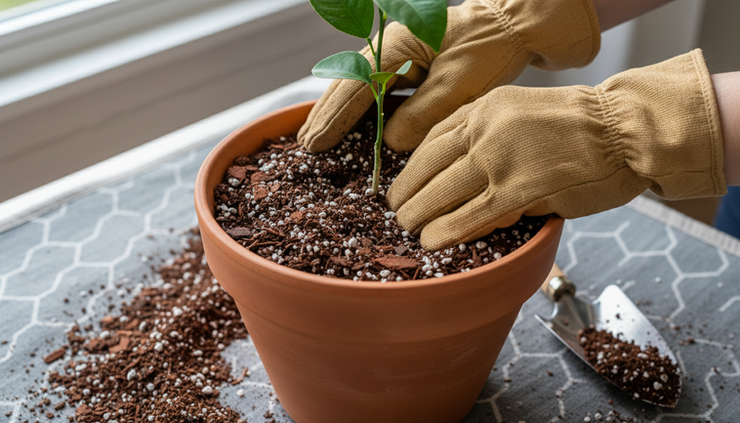
For extra drainage, place the tree in the pot so the top of the root ball sits slightly above the surrounding mix. Do not bury the trunk. The area where the trunk meets the roots should stay clear and dry.
After potting, water well until water runs from the drainage holes. Let the pot drain completely before returning it to any saucer or decorative cover.
Give your lemon tree the brightest spot you can
Light is the biggest challenge when growing lemons indoors. Citrus trees evolved for bright outdoor conditions, so a dim corner will not do. Without enough light, the tree may grow long weak stems, drop leaves, or refuse to flower.
Place the tree in the brightest window available. In the Southern Hemisphere, a north-facing window usually gives the strongest light through the day. East-facing windows can work if they receive several hours of direct morning sun. West-facing windows may also work, though hot afternoon sun through glass can scorch leaves in summer.
Aim for at least 6 hours of bright light each day. More is better, especially if fruit is the goal.
If your home does not get enough natural light, use a full-spectrum grow light. Position it above the canopy and keep it on for a consistent daily period. A timer makes this easier and helps the tree keep a regular rhythm.
Rotate the pot for even growth
Lemon trees lean towards the light. Turn the pot a quarter turn every week or two so all sides receive light. This keeps the canopy balanced and helps prevent one-sided growth.
If the tree spends part of the year outdoors, transition it slowly. A sudden move from indoor shade to outdoor sun can burn leaves. Start with a sheltered, bright spot, then increase direct sun over one to two weeks.
Support flowering and fruiting indoors
Lemon blossoms are one of the joys of indoor growing. They smell beautiful and can appear even on younger trees when conditions are right.
Indoor trees may need help with pollination because bees and other insects are not around. When flowers open, gently transfer pollen from flower to flower using a small paintbrush or cotton bud. Brush the centre of each flower lightly.
Not every flower will become fruit. That is normal. A small indoor tree can only support a limited crop. If it sets too many tiny lemons, remove some so the tree can put energy into fewer, stronger fruit.
Water deeply, then let the soil partly dry
Watering is where most indoor citrus problems start. Lemon trees need consistent moisture, but they do not like soggy roots. The aim is a cycle of deep watering followed by partial drying.
Check the soil before watering. Push a finger 3 to 5 cm into the mix. If it feels dry at that depth, water. If it still feels damp, wait.
When it is time to water, water thoroughly until liquid runs from the drainage holes. This encourages deeper roots and helps flush excess salts from the mix. Empty the saucer after drainage finishes. Never leave the pot standing in water.
A regular schedule can help, but the tree’s needs will shift through the year. Indoor heating, air conditioning, pot size, sunlight, and season all change how quickly the soil dries.
Signs of underwatering include:
Dry, pulling soil at the edge of the pot
Drooping leaves that feel thin or crisp
Leaf drop after a hot, bright period
Small fruit shrivelling or dropping
Signs of overwatering include:
Yellow leaves, especially lower leaves
Soil that smells sour or stays wet for days
Fungus gnats around the pot
Soft stems near the soil line
If unsure, wait another day and check again. Citrus usually recovers better from slight dryness than from long periods of wet soil.
Keep humidity steady
Indoor air can be dry, especially in winter when heating is running. Lemon trees prefer moderate humidity. Dry air can make leaf tips brown and can encourage pests such as spider mites.
To lift humidity around the tree:
Group it with other indoor plants.
Place the pot on a pebble tray with water below the pot base.
Keep it away from heater vents and cold draughts.
Mist occasionally if the room is very dry, but do not rely on misting alone.
Good airflow also helps. A room that is bright, warm, and gently ventilated is much better than a closed, stagnant space.

Feed, prune, and protect your indoor lemon tree
A potted lemon tree relies on you for nutrients. Unlike a garden tree, it cannot send roots out into surrounding soil. Regular feeding keeps leaves green, supports flowers, and helps fruit develop.
Use a fertiliser made for citrus. Follow the label, as products vary. Many indoor growers feed from spring through early autumn and reduce or stop feeding in winter when growth slows.
Look for a fertiliser that includes nitrogen and trace elements. Citrus often needs micronutrients such as magnesium, iron, zinc, and manganese. Yellow leaves with green veins can signal a nutrient issue, though overwatering can look similar, so check the soil moisture before adding more fertiliser.
A slow-release citrus fertiliser can be useful, especially for busy households. Liquid feeds can also work well, but apply them to damp soil to avoid stressing the roots.
Do not overfeed
More fertiliser does not mean more lemons. Too much can burn roots and cause salt build-up in the potting mix. If you see crusty white deposits on the soil surface or pot edge, flush the pot with plain water and let it drain well.
Feeding should support healthy growth, not force it.
Prune lightly for shape and airflow
Indoor lemon trees do not need heavy pruning. Light, regular shaping is better.
Prune to:
Remove dead, damaged, or crossing branches
Keep the tree compact enough for its space
Open the centre slightly for airflow
Remove suckers growing from below the graft union
Use clean, sharp secateurs. Cut just above a leaf node or outward-facing bud. Avoid removing too much foliage at once, as leaves make the energy the tree needs to flower and fruit.
If the tree becomes leggy, improve the light first. Pruning alone will not fix weak growth caused by shade.
Watch for common indoor pests
Indoor citrus can attract several pests. The most common include scale, aphids, mealybugs, spider mites, and fungus gnats.
Check weekly by looking under leaves, along stems, and around new growth. Early action makes pest control much easier.
Common signs include:
Sticky residue on leaves or the floor
Tiny webbing between leaves
White cottony clusters at leaf joints
Brown or tan bumps on stems
Small flies hovering near the soil
For light infestations, wipe leaves and stems with a damp cloth. Scale and mealybugs can often be removed by hand with a cotton bud dipped in soapy water. Insecticidal soap or horticultural oil may help, but always follow the product label and test a small area first.
For fungus gnats, let the top layer of soil dry more between watering. Yellow sticky traps can catch adults, but fixing wet soil is the real solution.
Avoid harsh sprays indoors unless the label clearly says they are suitable for indoor use. Move the tree outside to treat it if needed, then allow it to dry before bringing it back inside.

Enjoy the benefits of an indoor lemon tree
The reward for good care is more than fruit. A lemon tree brings life and scent into the home. The leaves stay green year-round, the flowers smell fresh and sweet, and ripe lemons feel like a small celebration.
Fresh fruit is the obvious benefit. Even a modest crop can be useful for salad dressings, tea, baking, marinades, and a squeeze over grilled fish or vegetables. Home-grown lemons also encourage less waste because picking one fresh fruit at a time is simple.
An indoor lemon tree can also improve the feel of a room. Like many houseplants, it adds greenery, helps soften indoor spaces, and can contribute to fresher-feeling air by supporting humidity and trapping some dust on leaves. Wiping the leaves gently keeps them clean and helps the plant photosynthesise well.
There is also the quiet satisfaction of caring for something living. Growing a lemon tree in indoor pot conditions teaches observation. The leaves tell you when the light is too low. The soil tells you when to water. New shoots show that the tree is settling in.
A simple weekly care rhythm works well:
Check the soil moisture.
Turn the pot for even light.
Look under leaves for pests.
Remove fallen leaves from the soil surface.
Note any yellowing, drooping, or new growth.
This takes only a few minutes, but it builds confidence quickly.
The best indoor gardening projects are the ones that fit into daily life. A lemon tree by a bright window does exactly that. Start with a healthy dwarf tree, give it a free-draining pot, place it in strong light, and water with care. The first blossom will make the effort feel worthwhile, and the first home-grown lemon will make it unforgettable.


Comments