
Growing Lime Citrus Trees Indoors Easy Care Tips for Fresh Fruit and Clean Air
- stuart taylor

- 2 days ago
- 9 min read
A lime tree in a sunny room can do more than look pretty. With the right light, soil, water and patience, it can fill your home with glossy green leaves, fragrant blossoms and, eventually, fresh limes for drinks, cooking and baking.
Indoor citrus is not difficult, but it does ask for consistency. Lime trees are hungry, light-loving plants. They dislike soggy roots, cold draughts and dark corners. Once those basics are sorted, they can become one of the most rewarding plants to grow indoors.
This guide covers practical, realistic tips for growing a lime citrus tree indoors, from choosing a pot to spotting pests before they get out of hand.

Choose the right lime tree for indoor growing
Not every citrus tree is suited to life inside. A standard lime tree can grow too large for most rooms, so look for a dwarf or grafted lime tree from a reputable nursery.
Good indoor options often include:
Dwarf Tahitian lime
A popular choice in Australia, known for juicy, seedless fruit and a manageable size when pruned.
Key lime or Mexican lime
Smaller fruit with a strong lime flavour. It can be productive but may be more sensitive to cold.
Makrut lime
Grown mainly for its aromatic leaves rather than juicy fruit. It is useful for cooking and can be kept compact.
When buying, choose a plant with healthy green leaves, no sticky residue, no webbing and no clusters of insects under the leaves. Avoid trees with yellowing leaves, waterlogged soil or roots circling heavily out of the drainage holes.
A young tree may take time to fruit indoors. That is normal. The first goal is strong root and leaf growth. Fruit comes later, once the plant has enough energy.
Give your lime tree bright light and steady warmth
Light is the biggest factor in indoor citrus success. Lime trees need plenty of direct sun to grow well, flower and develop fruit.
Aim for 6 to 8 hours of bright light each day. A north-facing window is often best in Australia, as it usually gives the strongest light. East-facing windows can work too, especially if they receive several hours of gentle morning sun. West-facing windows can be useful, but watch for harsh afternoon heat through glass in summer.
If your tree grows long, weak stems or drops leaves after moving indoors, it may not be getting enough light. A full-spectrum grow light can help, especially in winter or in apartments with limited sun.
Keep temperatures comfortable
Lime trees prefer a warm, stable environment. A good indoor range is about 18°C to 29°C during the day. They can tolerate slightly cooler nights, but they do not enjoy cold draughts or sudden temperature changes.
Keep the pot away from:
Open windows on cold nights
Air conditioner vents
Heaters and fireplaces
Glass doors that become very cold after dark
If you move your lime tree outside during warmer months, bring it back in before nights become cool. Ease it into the change by moving it gradually over several days. Sudden changes in light and temperature can cause leaf drop.
The best indoor spot for a lime tree is bright, warm and boring. Citrus plants love consistency.

Use free-draining soil and a pot that lets roots breathe
Lime trees hate sitting in wet soil. Indoors, water evaporates more slowly than it does outside, so drainage matters.
Use a premium citrus potting mix or a high-quality potting mix blended for container fruit trees. The best soil is loose, airy and free-draining, while still holding enough moisture for the roots to use.
A good indoor citrus mix should include materials such as:
Composted bark or similar organic matter
Coarse sand or perlite for drainage
A small amount of slow-release nutrients
A slightly acidic to neutral pH
Avoid using garden soil in pots. It compacts easily, drains poorly and can carry pests or disease. Heavy soil is one of the fastest ways to cause root rot in indoor citrus.
Pick the right pot size
A common mistake is placing a small lime tree into a very large pot. That extra soil stays wet for too long, which can suffocate roots.
Choose a pot that is only one size larger than the nursery pot. For example, if the tree is in a 20 cm pot, move it to around 25 cm. Once the tree grows and roots fill the pot, you can repot again.
Your pot needs:
At least one large drainage hole
A saucer that can be emptied after watering
Enough weight to stop the tree tipping over
Space for roots without holding too much wet mix
Terracotta pots are attractive and breathable, but they dry out faster. Plastic and glazed ceramic pots hold moisture longer. Both can work, as long as you adjust watering to suit.
Pot your lime tree gently
Repotting is best done in spring or early summer, when the tree is actively growing. Water the plant the day before, then slide it carefully from its old pot.
Loosen only the outer roots if they are circling tightly. Do not tear the root ball apart. Set the tree at the same depth it was growing before. Keep the graft union, the raised join near the lower trunk, above the soil line.
After potting, water thoroughly until liquid runs from the drainage holes. Empty the saucer after 10 to 15 minutes.
Water deeply, then let the top soil dry
Watering indoor citrus is a balance. Too little water causes wilting, blossom drop and dry leaf edges. Too much water causes yellow leaves, root rot and fungus gnats.
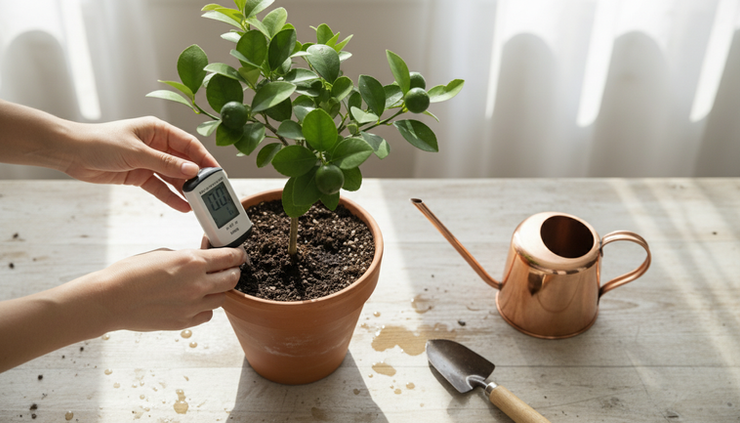
The simplest rule is to check the soil before watering. Push a finger 3 to 5 cm into the mix. If it feels dry at that depth, water. If it still feels damp, wait.
When watering, do it properly. Add water slowly until it runs through the drainage holes. This encourages deeper roots and helps prevent dry pockets in the potting mix.
In warm months, an indoor lime tree may need water once or twice a week. In winter, it may need much less. The exact timing depends on light, pot size, room temperature and soil type.
Signs your watering needs adjusting include:
Leaves curling inward
Often linked to dry soil, hot sun through glass or low humidity.
Yellow leaves dropping from the lower canopy
Often linked to overwatering or poor drainage.
Sour-smelling soil
A warning sign that the mix is staying too wet.
Dry soil pulling away from the pot edge
The plant has become too dry and needs slow, thorough rehydration.
Indoor air can be dry, especially with heating or cooling. Lime trees prefer moderate humidity. Place the pot on a pebble tray with water below the base of the pot, or group it near other plants to raise humidity slightly. Avoid constant misting if air circulation is poor, as damp leaves can invite fungal problems.
Feed your lime tree through the growing season
Citrus trees are heavy feeders. In a pot, nutrients wash out over time, so regular feeding keeps leaves green and supports flowers and fruit.
Use a fertiliser made for citrus or fruiting plants. These usually contain nitrogen for leafy growth, potassium for flowering and fruit, plus trace elements such as magnesium, iron and zinc.
A simple feeding routine works well:
Apply a controlled-release citrus fertiliser in spring, following the label.
Use a liquid citrus feed during active growth if the plant looks hungry.
Reduce feeding in late autumn and winter when growth slows.
Water before fertilising if the soil is dry, to protect roots.
Do not overdo it. More fertiliser does not mean more fruit. Too much can burn roots, cause leaf tip damage and build up salts in the potting mix.
If leaves turn yellow while the veins stay green, the tree may be short on iron or magnesium. This can happen when the potting mix becomes too alkaline or nutrients are depleted. A citrus-specific feed with trace elements often helps, but check watering first. Overwatered roots cannot take up nutrients properly.
Encourage flowers and fruit indoors
Lime trees commonly flower in spring, though indoor plants may bloom at different times if conditions are stable. Citrus flowers are wonderfully fragrant and mostly self-fertile, which means one tree can set fruit by itself.
Indoors, there may be fewer pollinating insects. To help fruit set, gently move pollen between flowers with a small soft paintbrush or cotton bud. Brush the centre of one flower, then the next.
Do not worry if the tree drops some flowers or tiny fruit. Citrus naturally sheds what it cannot support. A young tree may need a few seasons before carrying a full crop.
Among the most practical tips for growing a lime citrus tree is to focus on plant health before fruit. A leafy, well-rooted tree will produce more reliably than a stressed tree pushed too hard.
Watch for common pests and diseases
Indoor lime trees are protected from some outdoor problems, but pests can still arrive on new plants, fresh potting mix, open windows or plants moved in from outside.
Check your tree once a week. Look under leaves, along stems and around new growth. Early pest control is much easier than dealing with a large infestation.
Common indoor citrus pests include:
Scale insects
Small brown or pale bumps on stems and leaves. They suck sap and can leave sticky honeydew.
Aphids
Soft-bodied insects that cluster on new shoots and flower buds.
Spider mites
Tiny pests that cause fine speckling on leaves. Fine webbing may appear in dry conditions.
Mealybugs
White, cottony insects that hide in leaf joints and stem crevices.
Fungus gnats
Small flies around the soil surface, usually a sign the mix is staying too wet.
For light infestations, wipe pests away with a damp cloth or cotton bud dipped in diluted soapy water. Horticultural oil or insecticidal soap can also help, as long as you follow the product label. Spray in the evening or away from direct sun to reduce leaf burn risk.
Prevent disease before it starts
Most indoor lime tree diseases are linked to excess moisture, poor airflow or weak plant health.
Root rot is the biggest concern. It happens when roots sit in wet, low-oxygen soil. Prevent it with drainage holes, a free-draining mix and careful watering.
Sooty mould can appear as a black coating on leaves. It grows on the sticky honeydew left by scale, aphids or mealybugs. Treat the pest problem first, then gently wipe the leaves clean.
Powdery mildew and leaf spots can appear when foliage stays damp and air movement is poor. Give the tree space, avoid wetting leaves late in the day and remove fallen leaves from the pot surface.
Before bringing an outdoor citrus tree inside, inspect it closely. Rinse leaves, check under foliage and treat any pests first. Quarantine the plant away from other houseplants for a couple of weeks if possible.

Prune lightly and keep the tree manageable
Indoor lime trees do not need heavy pruning, but light trimming keeps them compact and tidy.
Prune in spring or after fruiting. Use clean, sharp secateurs and remove:
Dead or damaged twigs
Crossing branches
Weak shoots growing toward the centre
Suckers growing from below the graft union
You can also pinch back soft new growth to encourage branching. Aim for an open shape that lets light reach the inner leaves.
Avoid removing too much at once. Citrus stores energy in its leaves, so hard pruning can slow growth and delay fruiting. A small trim several times a year is better than one drastic cut.
Turn the pot every week or two so all sides receive light. This helps the tree grow evenly rather than leaning toward the window.
Enjoy the benefits of an indoor lime tree
A healthy indoor lime tree brings several rewards. Fresh limes are the obvious one. Even a modest harvest can brighten a meal, a salad dressing, a curry, a glass of sparkling water or a homemade dessert.
The flowers are another pleasure. Lime blossoms have a sweet, clean citrus scent that can fill a room when the tree is in bloom.
The leaves also add beauty. Their glossy green colour suits many homes, and the plant gives a room a living focal point. Like many indoor plants, lime trees can contribute to a fresher-feeling indoor environment by taking in carbon dioxide and releasing oxygen during photosynthesis. Some plants may also help reduce small amounts of airborne compounds, though houseplants should never replace good ventilation, cleaning and fresh air.
There is also the quiet satisfaction of caring for something productive. Watching buds turn into flowers, then fruit, makes indoor gardening feel purposeful.
These tips for growing a lime citrus tree indoors are not about perfection. They are about creating the right conditions and noticing what the plant tells you.
A simple care rhythm to follow
If you are just starting, keep the routine simple.
Place the tree in the brightest warm spot you have. Check the soil twice a week, but water only when the top few centimetres are dry. Feed during the growing season with citrus fertiliser. Inspect leaves weekly. Prune lightly when needed.
Here is a quick care guide to keep nearby.
Care need | What to aim for |
Light | 6 to 8 hours of bright light, with direct sun if possible |
Temperature | Around 18°C to 29°C, away from draughts and vents |
Soil | Free-draining citrus potting mix |
Pot | One size larger than the root ball, with drainage holes |
Water | Deep watering when the top 3 to 5 cm feels dry |
Fertiliser | Citrus feed in spring and summer, reduced in winter |
Pest checks | Inspect leaves and stems once a week |

Start with light, drainage and patience
The easiest way to succeed with an indoor lime tree is to get the foundations right. Give it the brightest position available, use a free-draining potting mix, water only when the soil begins to dry and feed during active growth.
From there, observe. Leaves, flowers and soil all give clues. If the tree looks pale, check light and nutrients. If leaves yellow and drop, check watering and drainage. If growth is weak, move it closer to sun.
Growing citrus indoors is a slow, satisfying project. Start with one healthy dwarf lime tree, care for it steadily, and enjoy the fresh scent, glossy leaves and the first home-grown lime when it finally ripens.


Comments