
How to Buy Cherry Fruit Trees Online in Perth Choosing the Right Variety and Care Tips

Growing cherries in Perth is possible, but it takes a bit more planning than planting a lemon or an olive. Cherry trees come from cooler regions, and many varieties need a proper winter chill to flower and fruit well. Perth’s warm summers, sandy soils, and mild winters mean the right variety and planting spot matter from the start.
That is why buying online can be both useful and risky. Online nurseries often stock a wider range than local garden centres, including dwarf trees and low-chill varieties. The challenge is knowing which tree will cope with Perth conditions, arrive healthy, and have the best chance of producing fruit.
This guide walks through how to choose a reputable nursery, what to look for in a cherry variety, and how to plant and care for your tree in a Perth garden.

Find reputable online nurseries before choosing a tree
A good online nursery does more than post a pretty photo. It gives clear details about the variety, rootstock, pollination needs, chill requirements, delivery timing, and suitability for different climates.
When buying online cherry fruit trees in Perth, look for nurseries that understand Australian growing zones and shipping rules. Fruit trees are living plants, and they need careful handling before they reach your door.
What to look for in an online nursery
A reputable online nursery should make the buying process clear. Before placing an order, check for these signs:
Detailed variety descriptions The listing should explain whether the tree is sweet or sour, self-fertile or pollination-dependent, dwarf or full-sized, and suitable for warmer climates.
Clear delivery information Many deciduous fruit trees ship bare-root in winter while dormant. This is normal, but the nursery should explain when trees are dispatched and how they are packed.
Australian growing advice Generic overseas descriptions are less helpful. Look for advice that mentions chill hours, Australian states, warmer regions, or Mediterranean climates.
Plant health and quarantine awareness Western Australia has biosecurity rules, so check that the nursery can ship to WA and follows the required plant movement conditions.
Accessible customer support A good nursery should be willing to answer questions about variety choice, pollination, and delivery.
Fair replacement or arrival policy The policy should explain what to do if a tree arrives damaged, dried out, or clearly unhealthy.
Avoid listings that simply say “cherry tree” without naming the variety. Also be cautious with very cheap trees from unknown sellers. A bargain is not worth much if the variety is wrong for Perth or the tree arrives stressed.
Where to search
Start with Australian online fruit tree nurseries, specialist deciduous tree growers, and established garden centres with online shops. Local Perth nurseries with delivery or click-and-collect options can also be useful because they often know which varieties perform better in coastal, inland, or hills suburbs.
If a nursery is based interstate, check the shipping page before getting attached to a variety. Some plants cannot be sent to WA, while others may only be available at certain times of year.
Choose a cherry variety that suits Perth
Cherry trees are not all the same. Some need hundreds of winter chill hours, while others can crop with less cold. Some need a second cherry tree nearby for pollination. Some grow into large trees, while others stay compact.
Perth gardeners should choose carefully because climate mismatch is one of the main reasons cherry trees fail to fruit.

Match the variety to winter chill
Cherry trees need a period of cool winter weather before they can break dormancy properly in spring. This is called chill requirement.
Perth generally has mild winters, especially near the coast. The Perth Hills and cooler inland pockets may have better conditions than warm coastal suburbs. That means low-chill varieties are usually the best place to start.
Common low-chill sweet cherry varieties include names such as Minnie Royal and Royal Lee, which are often discussed for warmer climates. Availability can vary, and they usually need each other or a compatible partner for pollination. Other popular varieties, such as Stella, Lapins, Van, Bing, or Sweetheart, may need more winter chill and are often better suited to cooler regions. Some may still grow well as trees in Perth but crop poorly.
Before buying, ask the nursery:
How much chill does this variety need?
Has it fruited in warm temperate or Mediterranean climates?
Is it recommended for Perth, WA, or similar climates?
Does it need a pollination partner?
Which other variety flowers at the same time?
Understand pollination before you order
Some cherry trees are self-fertile, which means they can set fruit with pollen from their own flowers. Others need a second compatible cherry variety nearby.
This matters when buying online cherry fruit trees because it is easy to order one tree and later discover it needs a partner. If space is tight, look for a self-fertile variety or a multi-grafted cherry tree if available and suitable for warm climates.
If you choose two trees, make sure they flower at the same time and are compatible. Two random cherry trees will not always pollinate each other.
Think about tree size and rootstock
Cherry trees can grow large if left unchecked. In a suburban Perth garden, a smaller tree is often easier to water, net, prune, and harvest.
Look for terms such as:
Dwarf
Semi-dwarf
Grafted
Multi-grafted
Colt rootstock
Gisela rootstock
Rootstock affects tree size, vigour, anchorage, and sometimes soil tolerance. Nursery listings may not always give full rootstock details, so ask if the information is missing.
For pots or small courtyards, dwarf or semi-dwarf trees are more practical. They still need good sun, regular watering, and a large container.
Plant cherry trees with Perth’s climate in mind
Cherry trees prefer fertile, well-drained soil, winter chill, spring sunshine, and summer moisture. Perth offers plenty of sun, but sandy soil and hot dry summers can stress young trees quickly.
The best results come from preparing the planting site before the tree arrives.
Plant at the right time
Bare-root cherry trees are usually planted in winter while dormant. This gives the roots time to settle before spring growth begins.
Potted cherry trees can be planted at other times, but avoid the worst heat of summer. If planting in spring or early autumn, water more carefully while the tree establishes.
Choose the best position
Cherry trees need full sun to flower and ripen fruit. Aim for at least six hours of direct sun a day. In Perth, a spot with morning sun and some protection from harsh late afternoon heat can help reduce stress, especially for young trees.
A good planting site should have:
Full sun for most of the day
Good air movement
Protection from strong hot winds
Free-draining soil
Space for netting when fruit develops
Avoid low spots where water sits after rain. Cherry trees dislike wet feet and can suffer root problems in poorly drained soil.
Improve sandy soil before planting
Many Perth gardens have sandy, low-nutrient soil. Cherries need better moisture retention than plain sand can offer.
Before planting, improve a wide area rather than just the hole. Mix in mature compost and well-rotted organic matter. Avoid adding strong fertiliser directly into the planting hole because it can burn new roots.
A good planting process looks like this:
Soak bare-root trees in a bucket of water for a few hours before planting.
Dig a hole wide enough to spread the roots comfortably.
Keep the graft union above soil level.
Backfill with improved soil and firm it gently.
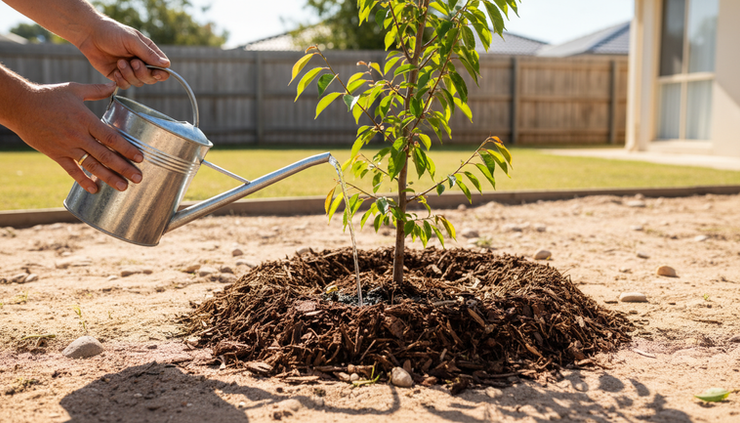
Water deeply to remove air pockets.
Add mulch around the tree, keeping it away from the trunk.
Mulch is especially valuable in Perth because it cools the soil and slows evaporation. Use composted wood chips, straw, or other organic mulch, but leave a clear gap around the trunk to reduce rot risk.
Care for healthy growth after planting
The first two to three years set the tree up for long-term health. A young cherry tree needs steady moisture, good structure, and protection from heat, pests, and competition.
Water deeply and consistently
Perth summers are dry, and young cherry trees have limited roots. Light sprinkling will not be enough. Water deeply so moisture reaches the root zone.
For the first summer, check soil moisture often. The soil should be moist but not soggy. Sandy soils dry quickly, so watering may need to be more frequent during hot spells.
A simple test is to push a finger into the soil beneath the mulch. If it is dry a few centimetres down, water deeply.
Container-grown cherries need even closer attention. Pots heat up faster and dry out sooner than garden beds. Use a large pot, premium potting mix, and keep the container out of extreme radiant heat.
Feed gently in the growing season
Cherry trees do not need heavy feeding at planting time. Once the tree starts growing, use a balanced fruit tree fertiliser according to the label. Compost and mulch also help build soil life over time.
Avoid pushing too much leafy growth with high-nitrogen fertiliser. Strong, soft growth can attract pests and may not help fruiting.
Prune for shape and airflow
Pruning keeps the tree manageable and improves light and air movement through the canopy. For Perth gardens, a lower, open shape can make summer care and bird netting much easier.
Remove:
Dead or damaged branches
Crossing branches
Suckers from below the graft
Crowded growth in the centre of the tree
Young trees need formative pruning. The aim is to build a strong framework, not to cut heavily every year. If unsure, follow the nursery’s pruning guide for the specific rootstock and tree form.
Protect flowers and fruit
Cherries are popular with birds, and fruit fly can also be a concern in many areas. Netting is often needed once fruit starts to colour.
Use wildlife-safe netting with a fine mesh that cannot trap birds, bats, or reptiles. Secure it well around the tree. If fruit fly pressure is common in your area, use suitable exclusion methods and follow local advice for monitoring and control.
Prepare for common Perth challenges
Cherry trees can grow beautifully and still fail to fruit if conditions are not right. Knowing the likely problems helps you respond early.
Not enough winter chill
If a cherry tree does not get the chill it needs, spring growth may be uneven and flowering may be poor. The best solution is prevention. Choose low-chill varieties and plant in the coolest suitable spot in the garden.
In warmer suburbs, cherries may be more of an experiment. If reliable crops are the main goal, speak with local growers or nurseries before buying.
Heat stress in summer
Hot winds and heatwaves can scorch leaves and stress young trees. Mulch, deep watering, and a sheltered position all help. Temporary shade cloth can protect a young tree during extreme heat, but do not leave it in deep shade long term.
Poor drainage
Cherry trees do not cope well with waterlogged soil. If drainage is poor, plant on a raised mound or in a raised bed. In heavy soils, avoid digging a deep planting hole that turns into a sump.
Birds taking the crop
Birds can strip cherries quickly once fruit colours. Plan for netting before the first crop appears. A smaller tree is much easier to protect than a tall one, which is another reason to choose dwarf or semi-dwarf options.
Weak fruit set
Poor fruit set can come from low chill, lack of pollination, unsuitable varieties, rain during flowering, or lack of bee activity. If your tree flowers but does not crop, check whether it needs a compatible partner and whether nearby flowers overlap.

Make a confident online purchase
Before you add a cherry tree to your cart, pause and check the essentials. The right tree should match both your garden and Perth’s climate.
Use this quick checklist:
Check | What to confirm |
Variety | Low-chill or suitable for warm temperate conditions |
Pollination | Self-fertile or paired with a compatible variety |
Size | Dwarf, semi-dwarf, or suitable for your available space |
Shipping | Nursery can send trees to WA |
Timing | Bare-root trees sent in winter or potted trees shipped safely |
Support | Nursery offers growing advice and arrival instructions |
The best online purchase is not always the most popular variety. It is the tree that suits your suburb, soil, space, and care routine.
Buying cherries for Perth is a little different from buying common backyard fruit trees. But with a reputable nursery, a climate-suitable variety, careful planting, and steady summer care, a cherry tree can become a rewarding feature in the garden. Start with the variety first, prepare the site before delivery, and give the tree its best chance from day one.


Comments