
How to Grow a Grapefruit Tree Indoors in a Pot with the Right Care

A grapefruit tree in a pot can turn a sunny room into a small indoor orchard. The glossy leaves smell fresh when brushed, the flowers can perfume the air, and with patience, the tree may even set fruit. It is not the easiest houseplant, but it is far from impossible.
The key is to treat it like what it is: a citrus tree that wants sun, air, steady moisture, and room for its roots. Indoor conditions are never quite the same as a warm backyard, so the goal is to get as close as possible while keeping the plant manageable.
If you have a bright window, a good pot, and a willingness to check in on your plant each week, growing a grapefruit tree indoors can be a rewarding project.

Choose a pot and soil that help the roots breathe
A grapefruit tree can live in a container for years, but the pot has to support both growth and drainage. Citrus roots dislike sitting in soggy mix. When the roots stay wet for too long, the tree struggles to take up oxygen, and problems show quickly through yellowing leaves, leaf drop, or slow growth.
Start with a pot that is large enough to give the roots space, but not so huge that the soil stays wet for days. For a young grafted grapefruit tree, a container around 30 to 40 cm wide is a sensible starting point. As the tree grows, move it into a pot one size larger rather than jumping straight into an oversized tub.
Look for these features:
Drainage holes
Several holes are better than one. Water should run freely from the base after each deep watering.
A stable shape
Grapefruit trees can become top-heavy. A wider pot is less likely to tip, especially near doors or open windows.
A movable setup
Once filled with potting mix and watered, a large pot can be heavy. A plant caddy with wheels makes it easier to rotate the tree or move it outdoors for cleaning.
Terracotta, glazed ceramic, plastic, and fibreglass can all work. Terracotta breathes well but dries out faster, which can be useful in humid areas and tricky in hot, dry rooms. Plastic holds moisture longer and is lighter, but it can overheat if placed in strong direct sun against glass.
For soil, avoid garden soil in pots. It compacts, drains poorly, and can bring in pests or disease. Use a premium citrus potting mix or a quality potting mix improved for drainage.
A good mix should feel open and springy, not dense or muddy. It may include materials such as composted bark, coarse sand, perlite, or coco coir. If the mix seems heavy, blend in extra perlite or fine orchid bark to improve airflow around the roots.
A simple indoor citrus mix can include:
Component | Why it helps |
Premium potting mix | Holds some moisture and nutrients |
Perlite | Adds air pockets and faster drainage |
Fine pine bark | Keeps the mix open and reduces compaction |
Compost in small amounts | Adds gentle organic matter |
Do not bury the trunk deeper than it was in the nursery pot. Keep the graft union, if visible, above the soil line. After potting, water well until excess water drains, then let the pot settle in a bright spot.
Give your grapefruit tree as much light as possible
Light is the make-or-break factor for a grapefruit tree indoors in a pot. Citrus trees are sun-loving plants. Outdoors, they often receive hours of direct light every day. Indoors, glass, shade, curtains, and distance from the window all reduce the amount of usable light.
Place the tree in the brightest position available. In Australia, a north-facing window usually gives the strongest light through the day. East-facing windows can also work, especially in warmer regions, as they provide gentle morning sun. West-facing windows may be bright but can become hot in summer, so watch for leaf scorch near glass.
A grapefruit tree grown indoors will do best with at least 6 hours of bright light each day. More is usually better, provided the leaves are not burning.
Signs your tree needs more light include:
Long, stretched stems with wide gaps between leaves
Leaves leaning strongly towards the window
Slow or weak new growth
Flower buds dropping before opening
Fruit that forms but fails to develop well
Rotate the pot a quarter turn every week or two. This keeps growth balanced and stops the tree from leaning too much in one direction.
If natural light is limited, a grow light can make a big difference. Choose a full-spectrum LED grow light and place it above the tree, not off to one side. Keep it on for around 10 to 12 hours a day, especially through winter. The aim is not to blast the plant with heat, but to give it steady, usable light.
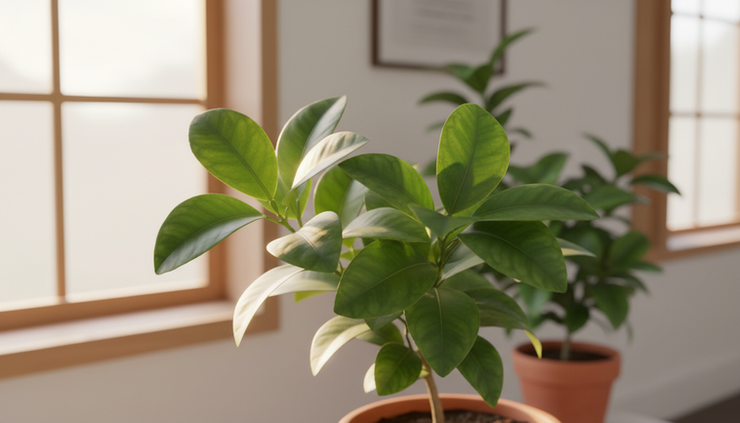
Temperature matters too. Grapefruit trees prefer warmth and dislike sudden chills. Keep the tree away from cold draughts, reverse-cycle air conditioning blasts, and heaters that dry the leaves. A steady indoor temperature is better than sharp swings.
If summer conditions are mild, the tree can spend time outdoors on a balcony or patio. Move it gradually. A plant that has been living indoors can sunburn if placed straight into harsh midday sun. Start with bright shade, then morning sun, and bring it back inside before cold nights arrive.
Water deeply, then let the mix partly dry
Watering citrus indoors is a balancing act. Too little water causes stress, leaf curl, and dry leaf edges. Too much water pushes air out of the potting mix and can lead to root rot. The best approach is to water deeply, then wait until the top layer of mix has dried before watering again.
Do not water on a strict calendar. A grapefruit tree may need more water during warm weather, active growth, or flowering. It may need much less in winter, during cloudy weeks, or in a cool room.
Use the finger test before watering. Push a finger 3 to 5 cm into the potting mix. If it feels dry at that depth, water. If it still feels moist, wait another day or two.
When it is time to water:
Place a saucer under the pot or move the pot somewhere it can drain.
Water slowly across the surface of the mix.
Keep watering until liquid runs from the drainage holes.
Empty the saucer after 10 to 15 minutes so the pot is not sitting in water.
This full soak matters. Small splashes only wet the top of the mix and encourage shallow roots. Deep watering helps moisture reach the whole root ball.
Indoor air can be dry, especially when heating or cooling is running. Citrus trees like moderate humidity, but misting alone rarely solves dry indoor air. A better option is to group plants together or place the pot near a wide tray filled with pebbles and water. The pot should sit above the waterline, not in it.
Watch the leaves for clues:
What you see | Likely cause | What to do |
Leaves curl inward and feel dry | Underwatering or hot sun | Check the mix and water deeply |
Leaves yellow and drop while soil is wet | Overwatering or poor drainage | Let the mix dry and check drainage |
Brown leaf tips | Dry air, salt build-up, or uneven watering | Flush the pot and improve humidity |
Sudden leaf drop | Shock from a move, cold, or watering stress | Stabilise conditions and avoid overreacting |
Tap water is usually fine, but potting mix can build up salts over time from water and fertiliser. Every month or two, flush the pot by watering generously and letting plenty of water drain through. This helps rinse excess salts from the root zone.
Feed regularly and keep pests under control
A potted grapefruit tree relies on you for nutrients. In the ground, roots can spread and search for food. In a container, the supply is limited and nutrients wash out with watering.
Use a fertiliser made for citrus, or a balanced slow-release fertiliser suitable for fruiting plants. During the main growing season, usually spring through early autumn, feed according to the product label. More fertiliser is not better. Overfeeding can burn roots, cause leaf tip damage, and leave excess salts in the potting mix.
Liquid citrus fertiliser can also work well, especially for smaller trees. Apply it to moist soil, not bone-dry mix. A stressed or dehydrated plant is more likely to suffer root burn.
Look for micronutrients as well as the main nutrients. Citrus often needs iron, magnesium, manganese, and zinc to keep leaves green and growth strong. If new leaves turn yellow while the veins stay green, the tree may be short of iron or struggling to take it up. This can happen when the potting mix is too wet, too alkaline, or depleted.
A citrus fertiliser with trace elements is the easiest fix for most indoor growers. Epsom salts can help if magnesium is the issue, shown by older leaves yellowing between the veins, but use it sparingly and only when the symptoms fit.
Pest control starts with regular checking. Indoor citrus can attract scale, mealybugs, aphids, spider mites, and fungus gnats. Catching them early makes control much easier.

Check the undersides of leaves, leaf joints, and young shoots. Scale may look like small brown or white bumps. Mealybugs look like tiny cottony clusters. Spider mites often show as fine webbing and pale speckling on leaves.
For small outbreaks:
Wipe pests off with a damp cloth or cotton bud.
Prune badly affected twigs if the infestation is localised.
Spray with horticultural oil or insecticidal soap, following the label.
Repeat treatments as needed, because eggs can hatch later.
Good airflow also helps. Do not cram the tree into a corner surrounded by clutter. Leave space around the canopy, and prune lightly to remove dead, crossing, or crowded growth.
If using sprays indoors, move the plant to a well-ventilated area and protect floors and furniture. Avoid spraying in direct sun or during extreme heat, as oils can damage leaves under harsh conditions.
Solve common indoor grapefruit problems with calm adjustments
Even with good care, indoor citrus can be dramatic. A move across the room, a cold night by a window, or one missed watering can trigger leaf drop. The trick is to look at the whole situation before making big changes.
Leaf drop after bringing the tree home
This is common. Nurseries, cars, shops, and living rooms all have different light and humidity. Give the tree the brightest stable spot you have. Keep watering steady, but do not drown it in an attempt to help. New leaves often appear once the plant adjusts.
No flowers or fruit
A grapefruit tree needs maturity, light, and energy before fruiting. Seed-grown trees can take many years to fruit and may grow too large indoors. A grafted dwarf or semi-dwarf tree is a better choice for containers. If a mature tree is not flowering, improve light first. Feeding helps, but light drives the energy needed for blooms.
Flowers appear but fruit drops
Some fruit drop is normal. Citrus trees often shed more young fruit than they keep. Indoors, heavy fruit drop can come from low light, hot dry air, irregular watering, or lack of pollination. Gently brushing open flowers with a small paintbrush can move pollen if there are no insects indoors.
Yellow leaves
Yellowing can mean many things, so check the pattern. Wet soil and yellow leaves point towards overwatering. Yellow new leaves with green veins may mean iron problems. Older yellow leaves can suggest low nitrogen or magnesium. Fix the growing conditions first, then feed with a citrus fertiliser that includes trace elements.
Sticky leaves or shiny floors
Sticky residue usually means sap-sucking pests such as scale, aphids, or mealybugs. Inspect the plant closely. Clean the leaves, treat pests, and repeat checks weekly until the problem is gone.
Roots circling the pot
If water runs straight through the pot, growth has slowed, or roots are visible at the drainage holes, the tree may be root-bound. Repot in spring if possible. Move up one pot size and refresh some of the old mix. Avoid heavy pruning of roots unless the tree is healthy and actively growing.

Pruning can also keep the tree manageable. Remove dead wood at any time. Shape lightly after a flush of growth, cutting just above a leaf node. Aim for an open canopy with strong branches. Heavy pruning can delay flowering, so take a little at a time.
Growing a grapefruit tree indoors is a slow project, but that is part of its charm. Start with a healthy grafted tree, give it the brightest spot in the home, use a free-draining mix, and water with care. Feed through the growing season and check for pests before they spread.
A perfect indoor crop is never guaranteed, but a healthy citrus tree is still a beautiful plant. With steady attention, growing a grapefruit tree can bring fragrance, greenery, and the possibility of home-grown fruit into even a small space.


Comments