
How to Protect Citrus Trees from Perth’s Hot Summer Weather

Perth summers can be brutal on citrus. A lemon or orange tree that looked glossy and strong in spring can sit through a run of hot days, dry winds, and sandy soil, then suddenly show curled leaves, dropped fruit, and sunburnt branches.
The good news is that citrus trees are tougher than they look when their basic needs are met. Most summer damage comes from a few fixable problems: too much afternoon heat, shallow watering, exposed roots, reflected heat, and dry wind. With the right setup, you can Protect Citrus Trees through the hottest months and keep them productive for years.
This guide focuses on practical steps that suit Perth gardens, especially homes with sandy soil, strong sun, and limited summer rain.

Choose a planting spot that protects roots and leaves
The best summer protection starts before the tree goes in the ground. Citrus trees love sun, but Perth’s hottest afternoon conditions can push young trees past their limit, especially in exposed yards.
Aim for a position with morning sun and some protection from harsh afternoon heat. A spot that gets six or more hours of light is usually suitable, but avoid planting where the tree will bake against a west-facing brick wall, metal fence, paving, or artificial turf. These surfaces store heat and radiate it back onto the tree long after the sun has moved.
Good planting positions often include:
The eastern or north-eastern side of a house
Near a light, open fence that does not trap too much heat
Beside larger shrubs that filter wind without stealing all the water
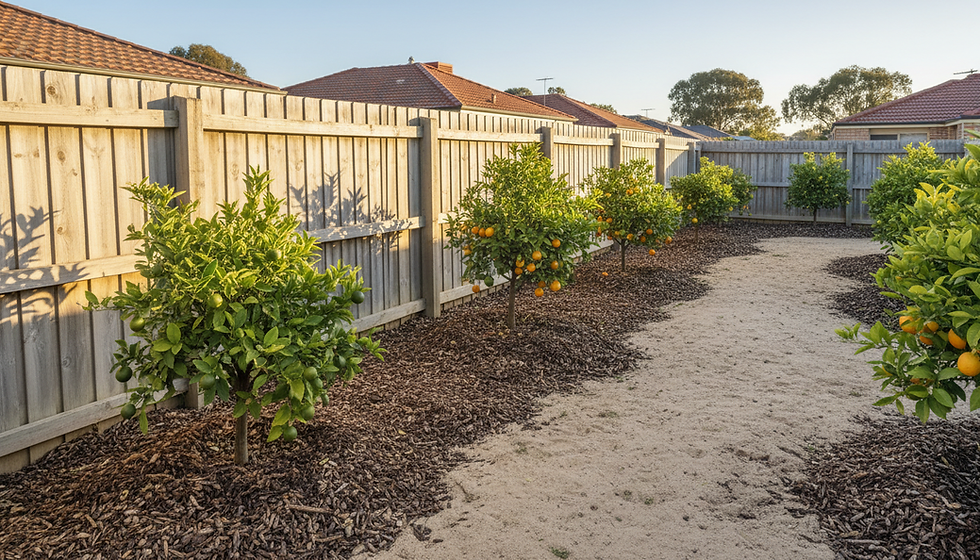
In a garden bed where mulch can spread well beyond the canopy
Leave enough space for air movement. Citrus trees dislike stagnant, humid pockets, but they also suffer in dry, blasting wind. A balanced spot gives the leaves light and airflow while shielding them from the worst easterlies and afternoon heat.
If the tree is already planted in a hot position, do not rush to move it in the middle of summer. Transplanting during heat adds stress. Instead, improve its conditions with mulch, temporary shade, and careful watering. If relocation is needed, plan it for autumn or early spring when the tree can recover more easily.
For potted citrus, placement is more flexible. Move pots away from heat-reflecting walls during heatwaves. Raise them slightly off paving with pot feet or bricks so hot surfaces do not cook the root zone from underneath.
Mulch well and water deeply
Perth’s sandy soils drain fast. That is helpful for preventing waterlogging in winter, but it can leave citrus roots dry in summer, even after what seems like a decent watering.
Citrus have many feeder roots near the surface. These fine roots are responsible for taking up much of the tree’s water and nutrients. When the top layer of soil dries out and heats up, the tree struggles.
Mulch is one of the simplest ways to reduce summer stress. It cools the soil, slows evaporation, protects feeder roots, and supports soil life as it breaks down.
Use organic mulch such as:
Lupin mulch
Pea straw
Lucerne hay
Pine bark fines
Compost mixed with coarse mulch
Tree prunings that have been well chipped
Spread mulch in a wide ring under the tree, ideally out to the drip line and a little beyond. Keep it about a hand’s width away from the trunk. Mulch piled against the trunk can trap moisture and encourage rot.
For most home citrus trees, a layer around 5 to 8 cm deep works well. Top it up as it breaks down, especially before the full heat of summer arrives.

Water the root zone, not the leaves
Citrus need deep, even moisture in hot weather. A quick spray with a hose wets the surface but often fails to reach the deeper root zone. It can also encourage shallow roots, which dry out sooner.
Instead, water slowly and deeply. The aim is to soak the soil under the canopy, not only near the trunk. A drip line, weeper hose, or slow-running hose moved around the root zone is usually better than a short overhead watering.
A simple way to check your watering is to dig gently into the soil after irrigation. If the soil below the mulch is still dry a few centimetres down, water is not reaching far enough.
During very hot spells, young trees and potted citrus may need more frequent attention than established in-ground trees. Pots dry out quickly because the root ball is exposed on all sides. Check them daily in extreme heat, especially if they sit on paving or near walls.
Water at the right time of day
Early morning is the best time to water citrus in summer. The tree starts the day hydrated, and less water is lost to evaporation. Evening watering can work when needed, especially during heatwaves, but avoid regularly wetting foliage late in the day.
If a tree is wilting badly in the afternoon, water the soil straight away rather than waiting until morning. Heat-stressed citrus can recover well once the root zone is cooled and moist.
Use shade cloth and windbreaks during extreme heat
Citrus trees need sunlight to flower and fruit, so permanent heavy shade is not the answer. Temporary summer protection is different. During heatwaves, shade cloth can prevent leaf scorch, fruit sunburn, and young bark damage.
This is especially useful for:
Newly planted citrus
Dwarf citrus in pots
Trees with a thin canopy
Trees recently pruned
Young trees with exposed trunks
Citrus planted near walls, fences, or paving
Use light to medium shade cloth rather than dense, dark material. You want to reduce the intensity of the sun while still allowing airflow. Set the shade cloth above or to the western side of the tree so it protects against the harshest afternoon sun.
Do not wrap the tree tightly. Trapped heat can make the problem worse. A simple temporary frame with stakes, clips, or a small structure works better than fabric pressed against leaves.
If the air cannot move through the shade setup, the tree may still overheat. Shade should cool the tree, not enclose it.
Windbreaks help too. Perth can get hot, dry easterly winds that strip moisture from citrus leaves. A wind-stressed tree loses water faster than its roots can replace it, even when the soil is damp.
Good windbreak options include:
A row of hardy shrubs
A mesh screen attached to stakes
A slatted fence
Temporary hessian or shade cloth on the windward side
Avoid solid barriers placed too close to the tree. A solid wall can create turbulence, reflected heat, and dry pockets. A filtered windbreak is usually better because it slows wind without stopping airflow completely.

Recognise heat stress before it becomes serious
Citrus trees often show heat stress before permanent damage occurs. The key is to spot the early signs and act quickly.
Common signs include:
Leaves curling lengthwise
Drooping leaves in the afternoon
Dull, grey-green foliage
Yellowing leaves after hot spells
Fruit drop, especially small fruit
Brown or scorched leaf edges
Sunburn patches on exposed fruit
Cracked or sunburnt bark on young branches
Some afternoon leaf droop can be normal on very hot days. The real test is how the tree looks the next morning. If the leaves recover overnight, the tree is coping. If it stays wilted in the morning, the root zone is likely too dry or too hot.
Leaf curl can also come from pests, so check closely. Heat-related curling usually affects many leaves at once during hot weather. Pest damage may show distorted new growth, sticky residue, sooty mould, or visible insects.
When heat stress appears, take steady steps rather than overcorrecting.
Start with the soil. Pull back the mulch and check moisture. If dry, water deeply and slowly. If the soil is wet but the tree is wilting, the problem may be root damage, poor drainage, or a pot that has become too hot.
Add temporary shade for the next few hot afternoons. Use a filtered windbreak if dry wind is an issue. Hold off on fertilising until the tree has recovered, because fertiliser can push soft new growth that is more vulnerable to heat.
Avoid heavy pruning during summer stress. Removing foliage exposes branches and fruit to more sun. If you need to remove dead or diseased wood, do it carefully and only as needed.
To Protect Citrus Trees from Perth’s Hot Summer, think in terms of reducing stress load. A tree can often handle heat, but heat plus dry roots, wind, reflected radiation, and fresh pruning can be too much at once.
Follow a seasonal care routine that builds summer resilience
Healthy citrus cope with summer better than trees that enter the season hungry, dry, or pest-ridden. A simple seasonal routine makes the tree more resilient before the hottest weather arrives.
Spring sets the tree up for heat
Spring is the time to build strength. As the weather warms, check irrigation, refresh mulch, and feed the tree with a citrus-suited fertiliser according to the product directions.
Water in fertiliser well. Nutrients need moisture to move into the root zone, and dry feeding can stress roots. If the tree is flowering or setting small fruit, keep moisture consistent. Uneven watering at this stage can lead to fruit drop later.
Check for pests on soft new growth. Aphids, scale, citrus leaf miner, and other common pests can weaken the canopy. Treat early with garden-safe methods suited to the pest and the season.
Early summer is the time to prepare
Before the first run of severe heat, inspect the whole tree.
Look for:
Thin canopy areas where branches may sunburn
Mulch that has broken down or blown away
Blocked drippers or uneven irrigation
Pots that are overheating
Fruit exposed to direct western sun
Weeds competing for water under the canopy
Top up mulch before the soil gets extremely hot. Test the irrigation system by running it and checking whether water spreads through the root zone. In sandy soil, water can sometimes channel straight down in one spot while nearby roots stay dry.
For potted citrus, consider moving the pot into a brighter morning-sun position for summer. If the pot is black or dark coloured, wrap it with hessian or place it inside a larger pale decorative pot to reduce heat on the root ball.
High summer care should be steady, not dramatic
In the hottest part of summer, avoid major changes unless the tree is in trouble. Keep moisture even, maintain mulch, and use temporary shade during heatwaves.
Do not fertilise heavily in extreme heat. Soft new leaves can scorch easily. If the tree needs feeding, wait for a cooler spell and water well before and after.
Pick up dropped fruit and leaves to reduce pest and disease pressure. Keep grass and weeds away from the trunk area, as they compete with feeder roots for water.
Watch containers closely. A potted citrus may look fine in the morning and wilt by late afternoon because the potting mix has dried through. If water runs straight down the sides of a dry pot, soak the pot slowly until the mix accepts water again.
Autumn helps recovery
Once the worst heat passes, assess the tree. Some scorched leaves may stay on the tree for a while before dropping. Resist the urge to strip them off immediately, as damaged leaves can still shade branches.
Light pruning can remove dead tips and improve shape, but avoid cutting into a bare, sun-exposed framework too aggressively. If bark has been sunburnt, protect exposed limbs from more sun while the canopy regrows.
Autumn is also a good time to improve soil with compost and refresh mulch. The tree can rebuild roots while the weather is milder.
Winter care keeps problems from carrying over
Winter in Perth is milder and wetter, but citrus still need attention. Check drainage after rain, especially in heavy or amended soils. Citrus dislike sitting in waterlogged ground.
This is also a useful time to plan changes. If summer showed that a tree is too exposed, decide whether to add a permanent windbreak, adjust irrigation, or relocate a pot. Winter planning prevents rushed decisions during the next heatwave.

Keep citrus cool, hydrated, and sheltered
Perth’s summer weather tests citrus trees, but most problems can be reduced with consistent care. Plant in a position that avoids the harshest reflected heat. Mulch wide and deep, but keep the trunk clear. Water slowly into the root zone, especially during dry spells. Add temporary shade and filtered wind protection when the forecast turns severe.
The best summer routine is simple: check the soil, watch the leaves, and act before stress becomes damage. A citrus tree with cool roots, steady moisture, and shelter from the worst afternoon sun has a much better chance of holding its leaves, keeping its fruit, and coming through summer ready for the next season.


Comments