
Why Growing Citrus Trees Boosts Health Garden Beauty and Savings

A citrus tree does more than fill a corner of the garden. It can give you fresh fruit, glossy foliage, spring perfume, shade, wildlife activity and a quiet sense of abundance. Whether it is a lemon in a large pot, a mandarin beside a path or a lime near the kitchen door, citrus earns its place by being both useful and beautiful.
For many Australian gardens, citrus also feels familiar. Lemons over the back fence, oranges ripening through winter, lime wedges picked fresh for dinner, these are simple pleasures that turn outdoor space into something generous. The appeal is practical, too. Citrus fruits are packed with nutrients, the trees support small garden ecosystems, and a well-cared-for plant can crop for years.

Citrus fruit brings useful nutrition close to home
Fresh citrus is best known for vitamin C, and for good reason. Oranges, mandarins, lemons, limes and grapefruit all provide vitamin C, which helps the body maintain normal immune function and supports collagen formation. That does not make citrus a cure-all, but it does make it a smart, everyday food to keep within reach.
Citrus fruits also offer other nutritional benefits:
Fibre
Whole citrus fruit contains fibre, especially in the pulp and membranes. Eating an orange or mandarin gives more fibre than drinking juice alone.
Fluid and freshness
Citrus fruits have a high water content, which makes them refreshing in warm weather and useful in simple meals.
Plant compounds
Citrus contains natural plant compounds, including flavonoids. These are part of what makes a varied diet rich in fruit and vegetables so worthwhile.
Lower added sugar options
A squeeze of lemon or lime can brighten food without relying on sugary sauces or heavy dressings.
The biggest nutritional advantage may be habit. When fruit is right outside, it becomes easier to use. A few mandarins can go into lunch boxes. Lemon juice can lift roasted vegetables. Lime can freshen a salad. Orange segments can turn yoghurt into a quick breakfast.
Homegrown citrus also encourages people to use the whole fruit. Zest adds flavour to cakes, marinades, dressings and pasta. Lemon slices can go into water. Orange peel can be used in baking. With homegrown produce, the fruit often becomes part of everyday cooking rather than something saved for special recipes.
Citrus trees support cleaner air and a richer garden ecosystem
Like other leafy plants, citrus trees take in carbon dioxide and release oxygen through photosynthesis. They also help trap dust on their leaves and soften the heat around paved spaces. A single tree will not solve air pollution, but a garden with healthy trees and shrubs can feel cooler, calmer and easier to breathe in.
Citrus trees also offer environmental benefits at a local scale. Their flowers attract pollinators, including bees and other beneficial insects. The dense foliage can provide shelter for small creatures. Fallen leaves break down and return organic matter to the soil.
A productive citrus garden can also reduce waste. When fruit ripens at home, there is less need for packaging and fewer last-minute supermarket trips. Peels can go into compost in moderate amounts, especially when mixed with plenty of brown materials such as dry leaves, shredded paper or straw.
Biodiversity improves when citrus forms part of a mixed garden. Rather than planting one tree in bare lawn, surround it with companion plants that attract helpful insects and cover the soil. Good options include:
Lavender, rosemary or thyme near sunny areas
Native flowering plants suited to the local climate
Marigolds or alyssum to attract beneficial insects
Comfrey or nasturtiums where they have room to grow
Mulch plants and groundcovers that help protect soil
A mixed planting can reduce pest pressure because it creates a more balanced space. Ladybirds, lacewings and small birds are more likely to visit when there is food, shelter and variety.

Citrus trees make gardens look lush, calm and lived in
Citrus has strong visual appeal all year. The leaves are glossy and deep green. The flowers are white and fragrant. The fruit adds colour and shape through the cooler months when many gardens can look a little bare.
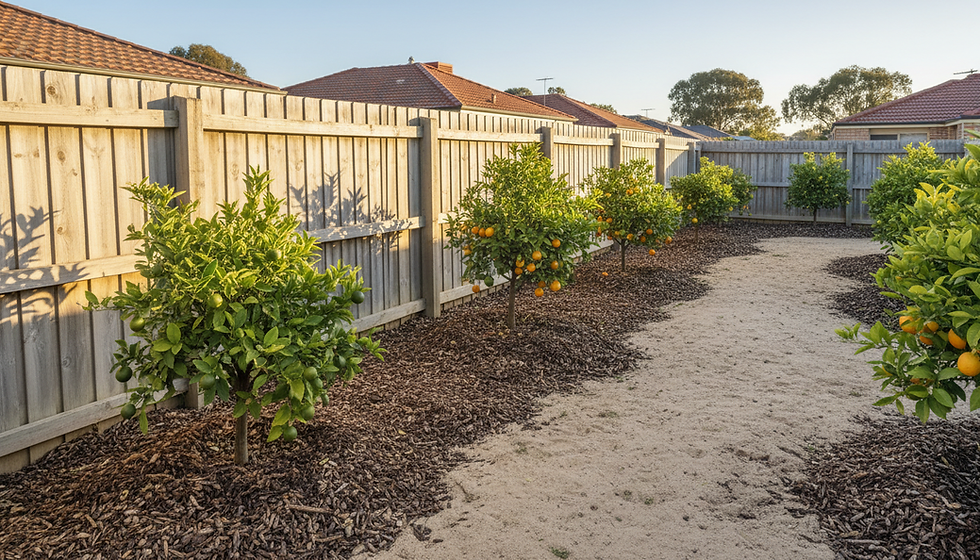
This makes citrus useful in both practical and decorative spaces. A lemon tree near a patio can act as a soft screen. A kumquat in a pot can bring structure to a courtyard. A row of dwarf citrus can edge a sunny path. Even one healthy tree can make a garden feel more established.
The scent is a major part of the charm. Citrus blossom has a clean, sweet fragrance that drifts through the garden without feeling heavy. When planted near a doorway, outdoor table or kitchen window, the tree becomes part of daily life.
Citrus trees also suit many garden styles. They can look relaxed in a cottage garden, neat in a courtyard, productive in a backyard food garden or sculptural in a large pot. Their shape is easy to read, and the fruit makes the plant feel generous.
For small spaces, dwarf varieties are especially useful. They can grow in large pots, provided the container drains well and the tree receives enough sun. A potted lime on a balcony or a dwarf mandarin in a courtyard still gives the look and reward of a larger fruiting tree.
The key is placement. Citrus needs sun to fruit well, so choose a position with at least six hours of direct sunlight where possible. North-facing spots are often valuable in Australian gardens. Protection from strong wind also helps, as wind can damage flowers, dry out pots and stress young trees.
Beginners can grow citrus successfully with simple care
Citrus can look impressive, but the basics are not complicated. Most problems come from poor drainage, inconsistent watering, lack of sunlight or missed feeding. Get those right and the tree has a strong chance of doing well.
Start with the right tree for the space
Choose a variety that suits how much room you have and what fruit you actually use. Lemons are popular because they are useful in cooking and drinks. Mandarins are great for fresh eating. Limes suit smaller households that cook often. Oranges need a little more patience and space, but they reward the wait.
If space is tight, look for dwarf or semi-dwarf citrus. These stay smaller and suit pots or compact garden beds.
Give it sun and drainage
Citrus likes full sun and hates sitting in waterlogged soil. In garden beds, improve heavy soil with compost and plant slightly raised if drainage is poor. In pots, use a quality potting mix designed for fruit trees or large containers, and make sure water can run freely from the base.
Avoid placing saucers under pots unless they are emptied after watering. Wet feet can cause root problems.
Water deeply, not constantly
Young trees need regular water while they establish. Mature trees cope better, but they still need deep watering during dry spells, especially when flowering and forming fruit.
A simple test helps. Push a finger into the soil near the root zone. If the top few centimetres feel dry, water deeply. If the soil feels wet, wait.
Potted citrus dries out faster than trees in the ground. In hot weather, pots may need more frequent attention.
Feed through the growing season
Citrus is a hungry plant. Use a citrus fertiliser or a complete fruit tree fertiliser, following the label directions. Feeding is usually most useful through the main growing season, with care not to overfeed in cold periods.
Yellowing leaves can mean several things, including nutrient shortage, too much water, poor drainage or cold stress. Check the growing conditions before adding more fertiliser.
Mulch without smothering the trunk
Mulch helps keep soil moisture steady and protects shallow roots. Use composted mulch, straw, sugar cane mulch or fine bark. Keep mulch away from the trunk so the base of the tree stays dry and healthy.
Watch for common pests
Citrus can attract scale, aphids, leaf miner and sooty mould. Regular checks make control easier. Look under leaves, along stems and on new growth.
For small problems, pruning off affected tips, washing pests away or using horticultural oil may be enough. Always follow product instructions and avoid spraying when bees are active on flowers.

Homegrown citrus can save money over time
Fresh citrus can be expensive at certain times of year, especially limes, specialty mandarins and quality lemons. A productive home tree can reduce the need to buy fruit often, particularly if the household cooks with citrus regularly.
The savings are not instant. A young tree, pot, soil, mulch and fertiliser all cost money at the start. The return comes over time as the tree settles in and begins producing well. Once established, a healthy tree can crop season after season with modest ongoing care.
The value is not only measured at the checkout. Homegrown citrus can also reduce food waste. Instead of buying a bag of lemons and using only one, you can pick what you need. That is useful for small households, occasional bakers and anyone who likes fresh flavour without overbuying.
There is also value in preserving the harvest. When a tree crops heavily, extra fruit can become:
Lemon curd or marmalade
Frozen juice cubes
Preserved lemons
Dried citrus slices
Cordial or syrup
Zest stored in the freezer
Shared fruit for neighbours and friends
A lemon tree that produces more than expected can still be useful if the fruit is handled well. The trick is to plan during the season rather than waiting until fruit drops.
For many people, the best saving is convenience. Having lemons, limes or mandarins outside the door cuts small purchases and adds freshness to meals without extra effort.
Citrus trees teach patience and reward attention
Growing fruit changes the way a garden feels. It asks for care, but it gives visible progress in return. New leaves flush. Buds form. Flowers open. Tiny fruit sets. Months later, the crop colours up and becomes part of the kitchen.
That slow rhythm is one reason citrus is so satisfying. It gives gardeners a reason to notice the seasons. It also makes outdoor space more purposeful. A tree is not just decoration, and it is not just produce. It sits somewhere between the two.
Children often enjoy citrus trees because the fruit is easy to recognise. Visitors notice them. Neighbours may ask about them. A fruiting tree can become a small point of connection, especially when there are extras to share.
Citrus also suits gradual learning. A beginner does not need to know everything at once. Start with one healthy tree in the right spot. Learn how the soil dries. Watch how new growth looks. Notice when the tree flowers. Keep feeding simple and consistent. Each season teaches something useful.

The best reason to plant citrus is the mix of rewards
Few garden plants offer such a strong combination of benefits. Citrus trees provide nutritious fruit, fragrant flowers, evergreen structure, shade, habitat and the pleasure of picking produce at home. They can suit backyards, courtyards and large pots. They can be productive without demanding expert-level skill.
Start with the fruit you use most. Give the tree sun, drainage, water, mulch and seasonal feeding. Check it regularly, especially when new growth appears. In return, citrus can become one of the most hardworking plants in the garden.
A well-grown citrus tree does not just save a few dollars or brighten a corner. It makes the garden more generous, more useful and more connected to everyday life.


Comments