
Why You Should Buy a Lemon Tree in Perth
- stuart taylor

- 3 days ago
- 9 min read
A lemon tree earns its place in a Perth garden almost every week of the year. It gives you glossy green leaves, fragrant blossom, useful shade, and fruit you will actually use. In a city where outdoor living matters and backyard space can be limited, that is a strong return from one plant.
Perth also gives lemon trees many of the conditions they like. The climate is warm, the winters are mild, and a sunny courtyard, verge, balcony, or backyard can often support a healthy citrus tree with the right care. The main trick is not deciding whether lemons suit Perth. They do. The real choice is which tree to buy, where to plant it, and how to help it cope with sandy soil and hot summers.
If you have been wondering whether to buy lemon tree at Perth nurseries or online, the answer is simple: choose a healthy tree suited to local conditions, then give it sun, water, mulch, and regular feeding. Do that, and a lemon tree can become one of the most useful plants you own.

Perth’s climate is well suited to lemon trees
Lemon trees come from warm growing regions, so Perth starts with a natural advantage. They need sun, warmth, and protection from harsh cold. Most Perth suburbs provide that, especially when the tree grows in a north-facing or west-facing position with at least several hours of direct sunlight.
Perth’s mild winters mean lemon trees can keep growing through much of the year. They may slow down in cooler months, but they do not face the deep winter freezes that can damage citrus in colder areas. In many gardens, the bigger challenge is summer heat and drying winds, not winter cold.
That is manageable with smart planting and simple care.
A good Perth lemon tree position usually has:
Full sun for strong growth
Lemon trees fruit best when they receive plenty of light.
Good drainage
Citrus dislike sitting in waterlogged soil, especially around the roots.
Protection from strong wind
Wind can dry leaves, knock flowers, and stress young trees.
Space for airflow
Air movement helps reduce fungal problems and keeps the tree healthier.
Perth’s sandy soil drains quickly, which citrus roots usually prefer over heavy, wet clay. The catch is that sandy soil does not hold nutrients or moisture well. A lemon tree planted straight into poor sand may survive, but it will struggle to thrive.
Before planting, improve the soil with compost and well-rotted organic matter. Then mulch the surface, keeping mulch away from the trunk. This helps the ground hold moisture during hot weather and gives soil life something to work with.
A lemon tree in Perth does not need pampering, but it does need consistency. Sun, water, mulch, and feeding make the difference between a tired tree and a productive one.
Fresh lemons are more useful than most backyard fruit
Some fruit trees produce a crop that arrives all at once. That can be fun, but it can also become a chore. Lemons are different. They are useful in small amounts, often, and across many meals.
Fresh lemons work in:
Salad dressings
Seafood and chicken dishes
Pasta and rice meals
Cakes, biscuits, and slices
Marinades
Sauces and dips
Lemon butter
Iced drinks
Tea
Preserving and cleaning around the home
A single lemon can lift a whole meal. That is why having a tree near the kitchen door feels so practical. You do not need to plan ahead. You walk outside, pick one, and use it.
The difference in freshness is real. A lemon picked from the tree has firm skin, bright aroma, and lively juice. Store-bought lemons are still useful, but they cannot match the satisfaction of picking one from your own garden.
For households that cook often, this is one of the best reasons to buy lemon tree varieties suited to home growing. The fruit is not a novelty crop. It is part of everyday cooking.
Lemon trees also offer a sense of abundance without demanding a huge garden. A well-kept tree can produce generously once established, and even a dwarf variety in a pot can provide a steady supply for a smaller household.
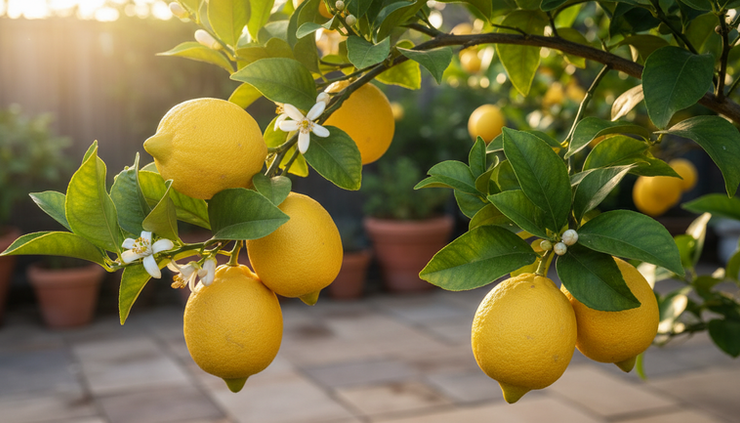
A lemon tree suits backyards, courtyards, and balconies
One of the best things about lemon trees is their flexibility. You do not need a large block to grow one. In Perth, a lemon tree can work in a traditional backyard, a compact courtyard, a raised bed, or a large pot on a sunny balcony.
The right setup depends on your space.
In the ground
Planting in the ground suits people who want a larger, longer-lived tree. The roots have more room, and the tree can become a strong feature in the garden.
Ground planting works best when you can offer:
A sunny position
Improved soil
Regular watering while the tree establishes
Enough space away from walls, fences, paving, and pipes
Avoid planting citrus in a low, soggy spot. Even in sandy Perth soils, some areas can stay damp after irrigation or rain. Lemon trees prefer moisture, but not wet feet.
In a pot
Potted lemon trees are ideal for courtyards, patios, and rentals. They are also a good choice if the garden soil is poor or if you want to control the growing conditions more closely.
Choose a large pot with drainage holes. A half wine barrel style pot, large ceramic planter, or sturdy plastic pot can work well. Use a quality potting mix made for citrus or fruiting plants. Do not use garden sand by itself, as it dries quickly and lacks structure.
Potted lemon trees need more regular watering than trees in the ground. During hot spells, the pot can dry out fast. Check the soil with a finger before watering. If the top few centimetres feel dry, water deeply until excess drains from the bottom.
A pot also lets you move the tree if needed. That can help when finding the best sun position, especially on balconies where light changes across the year.
Dwarf varieties
Dwarf lemon trees are especially useful in Perth homes with limited space. They produce full-sized fruit on a smaller tree. They still need sun, feeding, and water, but they are easier to manage, prune, and harvest.
A dwarf tree is not maintenance-free. It is simply easier to fit into modern outdoor spaces.
Lemon trees add beauty, scent, and structure
A lemon tree is not just productive. It is also attractive. The leaves stay green through the year, the flowers smell sweet, and the yellow fruit adds colour when many other plants look tired.
This matters in Perth, where summer can be hard on gardens. A well-watered citrus tree can bring a cool, lush feeling to a space that might otherwise become dry and bare.
Lemon trees can also help shape a garden. They can act as:
A feature tree in a lawn or garden bed
A soft screen near a fence
A productive patio plant
A focal point beside an outdoor dining area
A fragrant tree near a path or doorway
The blossom is another quiet pleasure. Citrus flowers are small, but their scent carries. Planting a lemon tree near a seating area or kitchen window lets you enjoy that fragrance when the tree is in flower.
Bees and other pollinators also visit citrus blossom. While a lemon tree is mainly grown for fruit, it can still support garden life when in bloom.

Choosing the right lemon tree makes care easier
Not all lemon trees grow in exactly the same way. Before buying, think about flavour, fruiting pattern, tree size, and where the tree will live.
Common lemon options include Meyer, Eureka, and Lisbon. Each has its own strengths.
Variety | Why people choose it | Good fit |
Meyer | Sweeter, less acidic fruit and a smaller growth habit | Pots, courtyards, smaller gardens |
Eureka | Popular home garden lemon with regular cropping in warm climates | Backyards and sunny garden beds |
Lisbon | Vigorous tree with classic tart lemons | Larger spaces with room to grow |
Meyer is often a favourite for small spaces because it stays more compact and has a softer flavour. Eureka is a well-known choice for home gardens and can fruit reliably when looked after. Lisbon can be a strong grower, so it suits gardens with more room.
When choosing a tree, look for health before size. A larger tree is not always better if it is root-bound, stressed, or poorly shaped.
A good nursery lemon tree should have:
Healthy green leaves
No major yellowing or leaf drop
A firm, straight trunk
No signs of scale, sooty mould, or heavy pest damage
Moist but not soggy potting mix
A clear graft union above the soil level
Several well-spaced branches
If possible, buy from a nursery that understands Perth growing conditions. Staff can often suggest suitable varieties and give advice on soil improvement, watering, and feeding for local suburbs.
A lemon tree is easy to maintain when you build good habits
Lemon trees are not hard to grow, but they are not plants you can ignore for months in a hot Perth summer. The key is regular, simple care.
Water deeply and consistently
Young lemon trees need steady moisture while they establish. Water deeply so moisture reaches the root zone. Shallow watering encourages shallow roots, which makes the tree less resilient in heat.
In summer, check the soil often. The exact watering schedule depends on soil, pot size, wind, shade, and temperature. A tree in a pot may need water far more often than a tree planted in improved ground.
The goal is evenly moist soil, not soggy soil.
Feed during the growing season
Citrus trees are hungry plants. They need nutrients to grow leaves, flowers, and fruit. Use a citrus fertiliser and follow the label directions. More is not better. Overfeeding can burn roots or push soft growth that attracts pests.
Yellowing leaves can mean several things, including low nitrogen, iron issues, poor drainage, cold stress, or irregular watering. Do not assume one fix suits every case. Check the growing conditions first.
Mulch well
Mulch helps Perth gardens cope with heat. Spread organic mulch around the root zone, but keep it a handspan away from the trunk. Mulch against the trunk can invite rot and pests.
Good mulch options include coarse wood chips, composted tree prunings, or straw-based garden mulch. As mulch breaks down, it also supports better soil structure.
Prune lightly
Lemon trees do not need heavy pruning each year. Remove dead, damaged, crossing, or inward-growing branches. Keep the centre open enough for airflow and light.
Cut off growth that appears below the graft union, as this is usually rootstock growth. It can take energy from the fruiting part of the tree.
Watch for common pests
Perth citrus can attract pests such as scale, aphids, leaf miner, and citrus gall wasp. Healthy trees cope better, so good watering and feeding are the first defence.
Check new growth and stems regularly. Early pest problems are easier to manage than heavy infestations. If you use sprays, choose products suitable for edible plants and follow the label carefully.
Buying locally helps you start with the right tree
A lemon tree is a long-term plant. Starting with the right one matters.
Local nurseries often stock trees that suit the climate and season. They may also carry dwarf options, grafted trees, and varieties that perform well in home gardens. Better still, you can inspect the tree before buying.
That matters because you can see the leaf colour, branch shape, pot size, and general health. You can also ask practical questions, such as:
Is this variety suited to a pot?
How large will it grow?
Has it been recently repotted?
What fertiliser does it need?
When is the best time to plant it?
How should it be protected during the first summer?
If buying online, choose a reputable supplier and check the plant size, rootstock information, shipping conditions, and care advice. A cheap tree is not a bargain if it arrives stressed or poorly grown.
For many Perth gardeners, spring and early autumn are comfortable times to plant because the weather is not at its most extreme. Summer planting can work, but the tree will need closer watering and protection from stress.

A lemon tree gives more than fruit
The best garden plants earn their keep in several ways. A lemon tree does that. It feeds the kitchen, softens outdoor spaces, attracts pollinators when in flower, and brings year-round greenery to a Perth garden.
It also teaches good gardening habits. Citrus rewards regular care. When you water well, improve the soil, mulch, and feed at the right time, you can see the result in new growth and better fruit.
There is also something deeply satisfying about growing an ingredient you use often. Lemons are not rare or fancy, but that is the point. They fit everyday life. A squeeze over dinner, zest in a cake, wedges for drinks, juice for a dressing, the tree keeps giving in small, useful ways.
If space is tight, choose a dwarf tree in a pot. If you have a sunny garden bed, plant a larger lemon and let it become part of the structure of the yard. Either way, match the variety to the space and start with a healthy plant.
Perth gives lemon trees a strong chance. Give the tree sun, improved soil, steady water, mulch, and citrus food, and it can become one of the most rewarding plants in the garden.


Comments