
Best Online Nurseries for Orange Citrus Trees in Perth Buying Guide

Buying a citrus tree online sounds simple until you realise Perth is not the same as the east coast. Western Australia has strict biosecurity rules, hot dry summers, sandy soils, and a climate that rewards the right orange tree but punishes a rushed purchase.
The good news is that orange trees grow beautifully in Perth when you choose a suitable variety, buy from a reputable seller, and plant with a little care. A healthy tree can give you glossy leaves, fragrant spring blossom, shade, and bowls of fruit for years.
This guide covers where to shop, what to check before you order, how to compare customer reviews, and how to care for your tree once it arrives.

Where to buy an orange citrus tree online in Perth
The safest place to start is with nurseries and retailers that already understand Western Australian growing conditions. WA has tighter plant movement rules than many other states, so a cheap tree from interstate is not always a good buy if it cannot legally or safely enter the state.
If you want to buy orange citrus tree stock online, look for sellers that clearly state:
Whether they ship to Western Australia
How they handle WA quarantine or biosecurity requirements
The pot size or tree height
The rootstock, where available
Whether the plant is grafted
Delivery method and expected timing
Their replacement or refund policy for damaged plants
Local Perth and WA nurseries with online ordering
Local suppliers are often the easiest choice because the trees are already suited to WA sale. Stock changes by season, so check current availability before ordering.
Dawsons Garden World
Dawsons is a well-known WA nursery group with a long history in Perth gardening. It is a strong place to check for citrus because staff and product ranges are usually geared towards local conditions. If online stock is limited, it can still be worth phoning a branch to ask what orange varieties are available.
Good for:
Perth-specific advice
Common backyard citrus varieties
Click and collect or local delivery options where available
Guildford Garden Centre
Guildford Garden Centre is another popular Perth nursery to check for fruit trees. It often appeals to gardeners looking for edible plants, ornamental trees, and expert advice in one place. When buying online, read the product information carefully and confirm whether the tree is suitable for your intended spot.
Good for:
Edible garden plants
Advice on citrus care
A broader range than many general retailers
Waldecks
Waldecks has multiple Perth garden centres and may offer online browsing or ordering depending on current stock. It is a useful option if you want a mainstream garden centre with familiar citrus varieties and the option to ask questions before buying.
Good for:
Common orange varieties
Garden supplies to buy at the same time
Local pickup if delivery is not suitable
Bunnings Warehouse
Bunnings can be handy for citrus trees, especially if you want convenience. Online availability varies, and stock can differ between stores. It may not always provide the same level of citrus detail as a specialist nursery, so inspect the plant carefully if you collect it in person.
Good for:
Convenience
Garden basics such as mulch, potting mix, and fertiliser
Budget-friendly options when stock is healthy
Australian online nurseries that may ship to WA
Some specialist fruit-tree nurseries in Australia sell online and ship plants to many areas. Before ordering an orange citrus tree online from an interstate retailer, check the WA shipping information on the product page, not just the general delivery page.
Examples of online sellers to research include:
Specialist fruit-tree nurseries
Heritage and rare plant nurseries
Citrus-focused growers
Large garden retailers with national delivery networks
The key word is research. Do not assume a nursery ships citrus to Perth just because it ships other plants. Citrus can be subject to different rules due to pest and disease risks.
A good interstate seller should make WA restrictions clear. If the terms are vague, ask before you pay.
Marketplaces and classified listings
Online marketplaces can be tempting, especially when sellers offer mature citrus trees at low prices. Treat them with caution.
Private sellers may not know whether a tree has pests, disease, or legal movement restrictions. A tree dug from the ground can also suffer severe transplant shock. If you buy this way, only consider local Perth sellers, inspect the plant in person, and avoid anything with yellowing leaves, sticky residue, scale insects, ants, or damaged bark.
For most home gardeners, a reputable nursery is the safer choice.
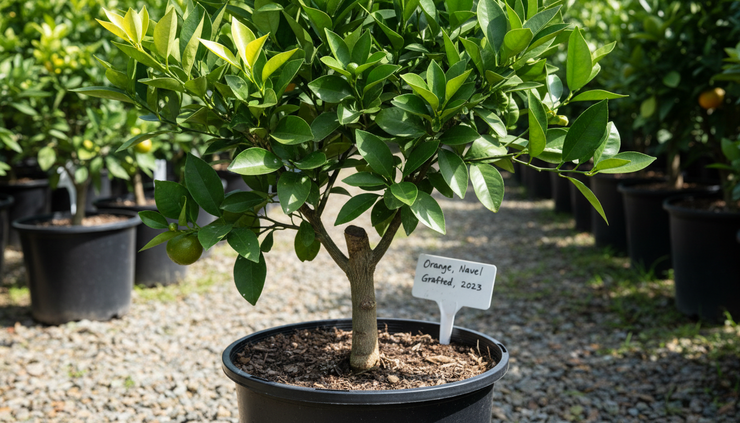
How to choose the right orange tree for a Perth garden
Orange trees are long-term plants, so it pays to choose carefully. The best tree is not always the biggest one. A smaller, healthy, well-grown tree often settles faster than a stressed larger one.
Pick a variety that suits how you eat oranges
Different orange varieties ripen at different times and have different flavours. Availability changes, but these are common types to look for.
Variety type | What it is known for | Best fit |
Navel orange | Sweet, seedless or low-seed fruit, easy peeling | Fresh eating |
Valencia orange | Juicy fruit, often used for juice | Juicing and longer harvest windows |
Blood orange | Rich colour and distinctive flavour | Fresh eating, salads, ornamental appeal |
Seville orange | Bitter fruit | Marmalade and cooking |
For a first citrus tree, a navel orange is often a friendly choice. It suits fresh eating and is familiar to most households. Valencia is worth considering if juice is the main goal.
Blood oranges can grow well in suitable conditions, but fruit colour can vary with temperature. The dramatic red flesh often develops best when there is a good difference between warm days and cool nights.
Check whether the tree is grafted
Most citrus trees sold by reputable nurseries are grafted. That means the fruiting variety is joined to a hardy rootstock. Grafted trees usually fruit sooner and perform more reliably than seed-grown trees.
Look for a visible graft union low on the trunk. It should look healed, not cracked or swollen in a worrying way.
Avoid trees with strong shoots growing from below the graft. These are rootstock suckers. They can take energy away from the fruiting variety.
Choose the right size
Online citrus trees are usually sold by pot size, such as small nursery pots through to larger advanced plants. Bigger is not always better.
Smaller trees are:
Easier to transport and plant
Often cheaper
Less likely to suffer from severe transplant shock
Good for patient gardeners
Larger trees are:
More visually impressive straight away
Closer to fruiting age
Better for instant structure
Heavier and more expensive to deliver
If you are planting in the ground, a healthy medium-sized tree is often the sweet spot. If you are growing in a pot, choose a dwarf or semi-dwarf option where available.
Inspect photos and descriptions closely
When buying online, you cannot handle the plant. Product descriptions matter.
Look for signs of quality:
Clear variety name
Current or representative plant photos
Pot size listed
Delivery size described
Healthy green foliage
No vague wording such as “citrus plant” with no variety listed
Care notes for your climate
Be careful with listings that show a mature fruiting tree but ship a small seedling. That may be fine if clearly stated, but it should not be a surprise.
What Perth’s climate means for orange tree care
Perth has many advantages for citrus. There is plenty of sunshine, mild winters, and long growing seasons. The main challenges are summer heat, drying winds, sandy soils, and water stress.
A little preparation makes a huge difference.
Choose a sunny, sheltered position
Orange trees need plenty of sun to flower and fruit well. Aim for a position with at least six hours of direct sun a day.
A spot with morning sun and some protection from the harshest afternoon wind can work well, especially for young trees. Avoid frost pockets in low areas, though heavy frost is not a common issue in most Perth suburbs.
Give the tree enough space. Standard orange trees can grow broad over time. Do not plant too close to walls, paving, drains, or fences.
Improve sandy soil before planting
Many Perth gardens have sandy, free-draining soil. Citrus likes drainage, but pure sand dries too fast and holds little nutrition.
Before planting, improve the soil with:
Mature compost
Quality soil improver
A small amount of aged manure, well mixed
Wetting agent if the soil repels water
Mulch after planting, kept away from the trunk
Do not bury the graft union. Plant the tree at the same depth it was growing in the pot.
Water deeply and consistently
Young orange trees need regular water while they establish. In Perth summer, shallow watering is rarely enough. It encourages weak surface roots and leaves the tree stressed.
Deep watering helps roots grow down into cooler soil. The exact schedule depends on soil, pot size, weather, and tree age, but the principle is simple: keep moisture steady without leaving the roots waterlogged.
For potted citrus, check moisture more often. Pots dry out quickly during hot spells.
A thick layer of mulch helps reduce evaporation, but keep mulch a few centimetres away from the trunk to reduce rot risk.

Feed during the growing season
Citrus trees are hungry plants. Use a citrus fertiliser and follow the label directions. Feeding is usually most useful during active growth rather than the coldest part of winter.
Common signs of nutrient stress include pale leaves, yellowing between leaf veins, and weak growth. Yellow leaves can also come from poor drainage, cold soil, or water stress, so do not reach for fertiliser as the only fix.
Trace elements can matter in sandy soils. Products made for citrus often include a balance of nutrients suited to oranges, lemons, mandarins, and similar trees.
Prune lightly
Orange trees do not need heavy pruning every year. Focus on:
Removing dead or damaged wood
Cutting out rootstock suckers below the graft
Improving airflow through crowded growth
Keeping the tree at a manageable height
Avoid hard pruning in extreme heat. If the trunk or main branches become suddenly exposed to strong sun, they can suffer sunburn.
Watch for common pests
Perth citrus trees can attract pests such as scale, aphids, citrus leaf miner, and ants. Healthy trees cope better than stressed trees, so watering and feeding are your first defence.
Check new growth often. Curled, silvery trails on young leaves can point to citrus leaf miner. Sticky leaves, black sooty mould, or ants can indicate sap-sucking insects.
Use garden-safe controls suited to edible plants and follow label directions. If you are unsure, take a clear photo or a sample leaf to a local nursery for advice.
How to use customer reviews before you order
Customer reviews can save you from disappointment, but only if you read them carefully. Star ratings alone do not tell the full story.
Look for reviews that mention the same things you care about.
Useful review signals
Good reviews often include details such as:
The tree arrived healthy and well packed
Leaves were green and pest-free
The plant matched the advertised size
Delivery was on time or clearly communicated
The nursery responded well to problems
The buyer was in Perth or WA
The tree survived its first summer
Reviews from WA customers are especially helpful. They can tell you whether the seller understands local shipping and quarantine issues.
Warning signs in reviews
Be cautious if several reviews mention:
Plants arriving dry or damaged
Poor packaging
No response from customer service
Smaller plants than expected
Confusion about shipping to WA
Pest problems on arrival
Repeated refund issues
One bad review does not always mean a seller is poor. Plants are living things, and delivery can go wrong. Patterns matter more than single complaints.
What a helpful testimonial looks like
Trust reviews that give practical detail rather than vague praise. For example:
“The navel orange arrived in good condition, with moist potting mix and no broken branches. It was smaller than an advanced tree but matched the listed pot size. After a few weeks in a sheltered spot, it put on new growth.”
That kind of review helps you judge size, packing, and plant health. It is far more useful than a simple “great tree”.
When reading testimonials, give extra weight to buyers who mention their suburb, climate, pot size, or planting conditions. Their experience will be more relevant than a review from a very different climate.
Why growing an orange tree at home is worth it
A home-grown orange tree is practical, but it also changes how a garden feels.
The obvious benefit is fresh fruit. Picking an orange from your own tree is satisfying in a way supermarket fruit cannot match. You can harvest when the fruit tastes right, use the zest while it is fresh, and share extras with neighbours or family.
Orange trees also bring year-round beauty. The leaves stay glossy and green, the spring flowers smell beautiful, and ripe fruit adds colour through the cooler months depending on the variety.
For small gardens, a dwarf orange in a large pot can create a productive feature near a courtyard or sunny patio. In larger gardens, a standard tree can become part of a small backyard orchard with lemons, mandarins, limes, and herbs.
There are practical benefits too:
Less food waste
Pick fruit as needed rather than buying a large bag at once.
Better garden structure
Citrus trees add height, shade, and evergreen foliage.
Seasonal interest
Blossom, fruit, and new growth give the garden something to notice through the year.
Family-friendly gardening
Citrus is an easy way to involve children in watering, harvesting, and cooking.
It is not instant, and it does take care. But a well-chosen orange tree can reward you for many seasons.

A simple buying checklist before you pay
Before you place an order, run through this quick checklist.
The seller clearly ships to Perth or WA
The variety name is listed
The tree is grafted, where stated
The pot size or plant height is clear
Reviews mention healthy arrival and good packing
Delivery timing suits the weather
The refund policy covers damaged plants
You have a sunny planting spot ready
Soil improver, mulch, and citrus fertiliser are on hand
You know whether you want a standard, dwarf, or semi-dwarf tree
If ordering during extreme heat, ask the nursery whether it is better to delay shipping. A good seller will care about the plant arriving alive, not just sending it quickly.
The best choice for most Perth buyers
For most Perth gardeners, the best place to start is a reputable local nursery with online ordering or click and collect. Local nurseries are more likely to stock varieties suited to WA conditions and can give advice that matches Perth’s climate.
If you want a rarer variety, look at specialist Australian online nurseries, but only after confirming WA shipping rules. Cheap interstate listings are not worth the risk if the plant cannot be sent legally, arrives stressed, or lacks clear variety information.
Choose a healthy grafted tree, match the variety to how you will use the fruit, prepare your soil, and water deeply through the first summer. Do those basics well, and your orange tree has every chance to become one of the most useful and beautiful plants in the garden.


Comments