
Best Orange Tree Varieties for Perth Gardeners
- stuart taylor

- 2 days ago
- 9 min read
Perth is kind to citrus, but it can be tough on the wrong citrus. Hot dry summers, sandy soils, sea breezes, and winter rain all shape how well an orange grows, flowers, and holds fruit. Pick the right variety and give it steady care, and a backyard tree can become one of the most useful plants in the garden.
The best choices are not always the biggest or fastest-growing trees. For most Perth gardens, the winners are varieties that handle heat, crop reliably, and suit how the fruit will be used at home, whether that means lunchbox segments, fresh juice, marmalade, or a compact tree in a large pot.

Why Perth is a good place to grow oranges
Perth has a Mediterranean-style climate, with mild wet winters and long dry summers. That pattern suits many citrus types because oranges like sunshine, warmth, and a drier atmosphere than many tropical fruit trees.
The main challenge is not usually lack of sun. It is water management.
Perth’s sandy soils drain quickly and can be low in organic matter. In summer, that means a young citrus tree can dry out fast. In winter, low spots can become too wet after heavy rain, especially if the soil has been improved unevenly or if paving directs water towards the root zone.
A healthy orange tree wants:
Full sun
Aim for at least 6 hours of direct sun each day.
Good drainage
Citrus roots dislike sitting in cold, wet soil.
Reliable summer water
Deep watering is better than frequent shallow sprinkles.
Food through the growing season
Citrus are hungry plants, especially once they start cropping.
Protection from harsh wind
Dry wind can stress young trees and mark fruit.
If there is one rule for Perth, it is this: plant citrus where it gets sun, but do not leave it to survive summer on its own. Even established trees crop better with regular deep watering during hot spells.
The best orange varieties for Perth gardens
The right variety depends on space, taste, and timing. A family that eats oranges fresh may prefer navels. Someone who juices every morning may want Valencia. A keen cook may plant Seville even though it is too bitter for fresh eating.
Here are the most useful options for Perth gardeners.
Washington Navel is the easy fresh-eating favourite
Washington Navel is one of the most popular backyard oranges for a reason. It is sweet, seedless or close to seedless, easy to peel, and good for eating fresh. The fruit usually ripens in winter, which is handy because homegrown citrus brings colour when much of the garden slows down.
This is a strong choice for families because the fruit is practical. It segments cleanly, does not need juicing gear, and stores reasonably well on the tree once ripe.
Best for
Fresh eating, lunchboxes, beginner citrus growers, and medium-sized backyards.
Perth growing tip
Give Washington Navel steady moisture from flowering through fruit development. Dry stress can reduce fruit size and may cause fruit drop, especially on young trees.
Lane Late Navel extends the navel season
Lane Late Navel is similar in style to Washington Navel, but it ripens later. That makes it useful if there is already an early or mid-season navel in the garden, or if the goal is to stretch the harvest window.
The fruit is sweet, easy to peel, and usually pleasant eaten fresh. It can hang on the tree well, which gives home gardeners more flexibility than a variety that needs picking all at once.
Best for
Fresh eating over a longer season and gardens with room for more than one citrus tree.
Perth growing tip
Late fruit can sit on the tree into warmer weather, so keep watering consistent as spring heats up. Mulch helps reduce stress around the root zone.
Cara Cara Navel brings colour and sweetness
Cara Cara is a navel orange with pink to reddish flesh. The flavour is usually sweet and low in sharpness, with a softer acidity than many standard oranges. It looks striking when sliced, which makes it popular for fruit platters and salads.
It grows much like other navels, so it suits a sunny Perth garden with the usual citrus care. It is a good pick when the garden only has room for one feature citrus and the fruit needs to feel a little special.
Best for
Fresh eating, salads, colourful fruit bowls, and gardeners who want something different without choosing a difficult tree.
Perth growing tip
Colour and flavour improve when fruit matures properly on the tree. Avoid picking too early just because the skin has turned orange. Taste is the best test.
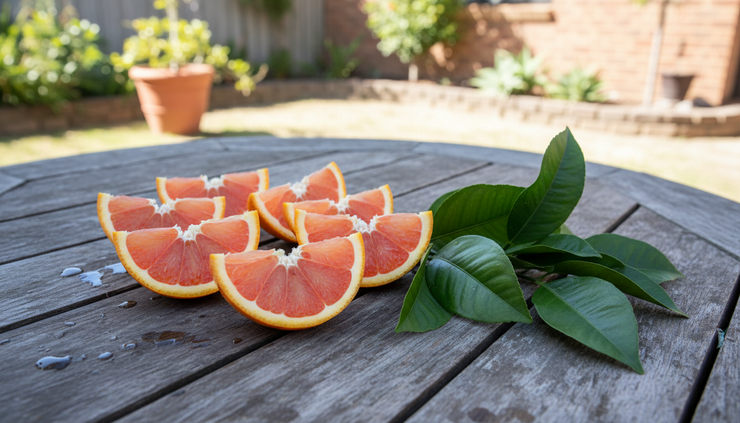
Valencia is the best orange for juicing
Valencia is the classic juice orange. It has a good balance of sweetness and acidity, and it is usually more suitable for juicing than navels. While navels can turn bitter after juicing if left to stand, Valencia juice is more reliable.
Valencia often ripens later than winter navels, which helps spread the harvest. In a Perth garden, that can mean fresh eating from navels and juice from Valencia later in the season.
Best for
Fresh juice, larger households, and gardeners who want a productive, practical tree.
Perth growing tip
Valencia can carry fruit while the next crop is forming. That makes feeding and watering important. A neglected tree may still survive, but it will not produce the quality or quantity it could.
Blood oranges suit gardeners who like sharp flavour
Blood oranges are grown for their coloured flesh and complex flavour. The colour can range from blush to deep red, depending on the variety and conditions. In many citrus types, cooler nights help develop stronger colour, so results can vary from garden to garden.
Common blood orange types include Moro and Tarocco. They tend to suit people who like citrus with more tang and character. They are excellent sliced, juiced, or used in desserts.
Best for
Cooking, fresh slices, drinks, and gardeners who value flavour over perfect sweetness.
Perth growing tip
Plant blood oranges in full sun and let fruit mature properly. The rind colour alone does not always show what is happening inside.
Seville orange is for marmalade, not snacking
Seville is a bitter orange, and that bitterness is the point. It makes outstanding marmalade because the peel, acidity, and pectin work well together. It is not the variety to choose if the aim is sweet fruit for children or fresh eating.
In a home garden, Seville is a specialist tree. It earns its space if marmalade, preserving, and cooking matter. If space is tight and the household mostly wants sweet fruit, choose a navel or Valencia instead.
Best for
Marmalade, preserves, sauces, and keen home cooks.
Perth growing tip
Seville can be vigorous, so allow room for growth or keep it shaped by light pruning after harvest.
Dwarf orange trees are ideal for small Perth gardens
Not every garden has room for a full-sized citrus tree. Dwarf citrus are grafted onto smaller-growing rootstocks, which makes them easier to manage in courtyards, narrow garden beds, and large pots.
A dwarf tree can still produce full-sized fruit. The tree is smaller, not the orange. That makes dwarf navels, dwarf Valencia, and dwarf blood oranges useful for modern suburban blocks.
For pots, choose a large container with drainage holes and use a premium potting mix made for fruit trees or citrus. A pot on hot paving can dry out quickly in Perth summer, so check moisture often.
Best for
Courtyards, patios, rentals, small gardens, and gardeners who want easier netting and picking.
Perth growing tip
Do not let a potted citrus sit in a saucer of water. Good drainage matters as much in a pot as it does in the ground.
Quick comparison of orange varieties for Perth
Variety | Best use | Harvest style | Good fit for Perth gardens |
Washington Navel | Fresh eating | Winter | Reliable, sweet, and easy to peel |
Lane Late Navel | Fresh eating | Later than many navels | Extends the eating season |
Cara Cara Navel | Fresh eating and salads | Winter | Colourful flesh and sweet flavour |
Valencia | Juicing | Later season | Productive and practical |
Blood orange | Cooking, slicing, juice | Winter to late winter | Distinct flavour and colour |
Seville | Marmalade | Winter | Best for preserving, not fresh eating |
Dwarf orange varieties | Fresh fruit in small spaces | Depends on variety | Good for pots and compact gardens |
If choosing only one sweet orange tree for Perth conditions, Washington Navel is often the safest all-rounder. If juice matters most, choose Valencia. If space is limited, choose the dwarf form of the variety that best suits how the fruit will be used.

What to look for when buying a young tree
A good start matters. Citrus can recover from poor early care, but a strong young tree makes the first few years much easier.
Choose a tree with:
A straight trunk and a clear graft union
Glossy green leaves without heavy yellowing
No obvious scale, ants, webbing, or distorted new growth
A root ball that is moist, not dry or sour-smelling
A balanced shape with several healthy branches
Avoid trees that are covered in fruit while still small. Heavy fruiting can stress a young plant. If a newly planted tree tries to carry a large crop in its first year, remove some or all of the fruit so energy goes into roots and structure.
For the first 12 to 18 months, the goal is not maximum harvest. The goal is a strong framework.
How to plant an orange tree in Perth soil
A Perth citrus planting hole does not need to be huge, but it does need to drain. Dig a hole about twice as wide as the pot and roughly the same depth. The top of the root ball should sit level with the surrounding soil, not buried.
Mixing large amounts of compost into only the planting hole can create a soft pocket that holds water differently from the surrounding sand. It is better to improve the broader area over time with mulch and organic matter.
After planting:
Water the tree in well.
Add mulch around the root zone.
Keep mulch away from the trunk.
Stake only if the site is windy.
Water deeply and regularly while roots establish.
A layer of mulch is especially valuable in Perth. It cools the soil, slows evaporation, and helps build better soil over time. Keep a small clear space around the trunk to reduce collar rot risk.
Feeding and watering for better fruit
Citrus need food during active growth. Use a citrus fertiliser or a complete fruit tree fertiliser, following the label rate. More is not better. Too much fertiliser can burn roots, push soft growth, or create nutrient imbalance.
Many Perth citrus problems trace back to uneven watering. Leaves curl in heat, young fruit drops, and the tree struggles to size fruit. Deep watering encourages roots to move down, while shallow watering keeps them near the surface where soil dries quickly.
Good watering habits include:
Watering deeply during hot weather
Checking potted trees more often than in-ground trees
Reducing watering during cool wet periods
Keeping mulch topped up
Avoiding constant wet soil around the trunk
Yellow leaves can mean several things, including hunger, poor drainage, cold soil, or trace element issues. Look at the whole tree and the season before adding more fertiliser.
Common pests and problems in Perth citrus
Citrus are tough, but they are not pest-free. Most problems are manageable if caught early.
Citrus leafminer
This pest marks and twists soft new leaves. It is most noticeable on fresh flushes of growth. Mature trees usually cope, but young trees can be set back.
Scale insects
Scale appear as small bumps on stems and leaves. Ant activity can be a clue because ants feed on the honeydew produced by sap-sucking insects.
Citrus gall wasp
Gall wasp causes swollen lumps on stems. Prune out affected material at the right time and dispose of it carefully. Avoid heavy nitrogen feeding that creates excessive soft growth.
Fruit fly
Fruit fly pressure varies by area and season. Good hygiene helps. Collect fallen fruit, harvest ripe fruit promptly, and use approved control options if needed.
Sunburn
Fruit and branches can be damaged in extreme sun, especially after heavy pruning. Avoid opening the canopy too suddenly before summer.

FAQ
What is the best orange variety for Perth?
Washington Navel is the best all-round choice for many Perth gardens. It is sweet, easy to peel, and reliable for fresh eating. Valencia is the better choice if the main goal is juice.
Can orange trees grow in pots in Perth?
Yes. Dwarf orange varieties grow well in large pots with good drainage, quality potting mix, regular feeding, and careful summer watering. Pots dry out quickly in hot weather, so they need closer attention than trees planted in the ground.
When should I plant an orange tree in Perth?
Autumn and spring are both good planting times. Avoid planting during extreme summer heat. Young trees establish best when the weather is mild and the soil is warm enough for root growth.
How much sun does an orange tree need?
Give it at least 6 hours of direct sun per day. More sun usually means better flowering and sweeter fruit, as long as the tree has enough water through summer.
Why is my orange tree dropping fruit?
Fruit drop can happen when the tree is young, stressed, too dry, poorly fed, or carrying more fruit than it can support. Some natural fruit drop is normal, but repeated heavy drop usually points to water stress or poor growing conditions.
Choosing the right tree for your garden
The best variety is the one that matches the garden and the kitchen. For sweet fruit with little fuss, plant Washington Navel. For juice, plant Valencia. For colour, choose Cara Cara or a blood orange. For preserving, Seville is the specialist. For small spaces, choose a dwarf form and commit to steady watering.
Good citrus is a long-term garden investment. Start with a healthy grafted tree, plant it in sun, protect the soil with mulch, and keep the water steady through Perth’s dry months.
For more citrus growing guidance and variety inspiration, visit St Clements Citrus before choosing your next tree.


Comments